

You know bread is my department. And if you’ve tried my 3-Ingredient Bread Without Yeast, you already know I have a soft spot for recipes that don’t require yeast, hours of waiting, or a particularly long ingredient list.
That’s how I ended up in Norway. Not literally. Unfortunately.
I’m talking about flatbrød, Norwegian flatbread. And this one is quite different from the breads I usually make. There’s no yeast, no waiting for dough to rise, and no wondering whether it has doubled in size or whether I’m just staring at it too much. It’s whole wheat flour, water and salt. That’s it.
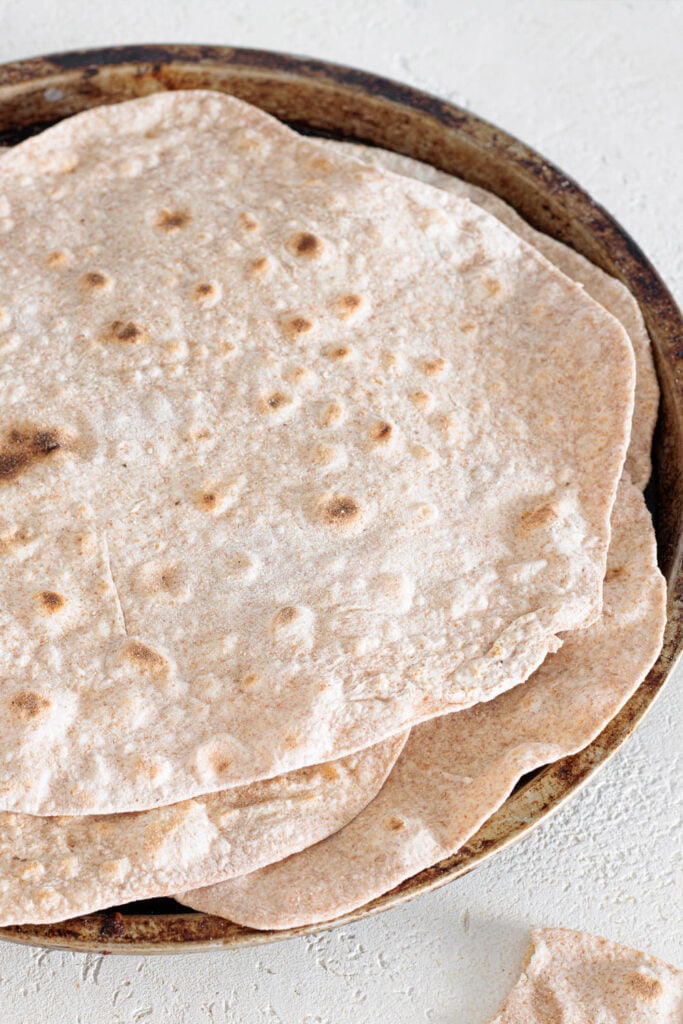
The only real challenge is rolling it thin enough. And when I say thin, I mean thinner than you initially think is reasonable.
Ingredients for My Norwegian Flatbread
There really are only three ingredients here.
This is what you’ll need to make my Norwegian Flatbread:
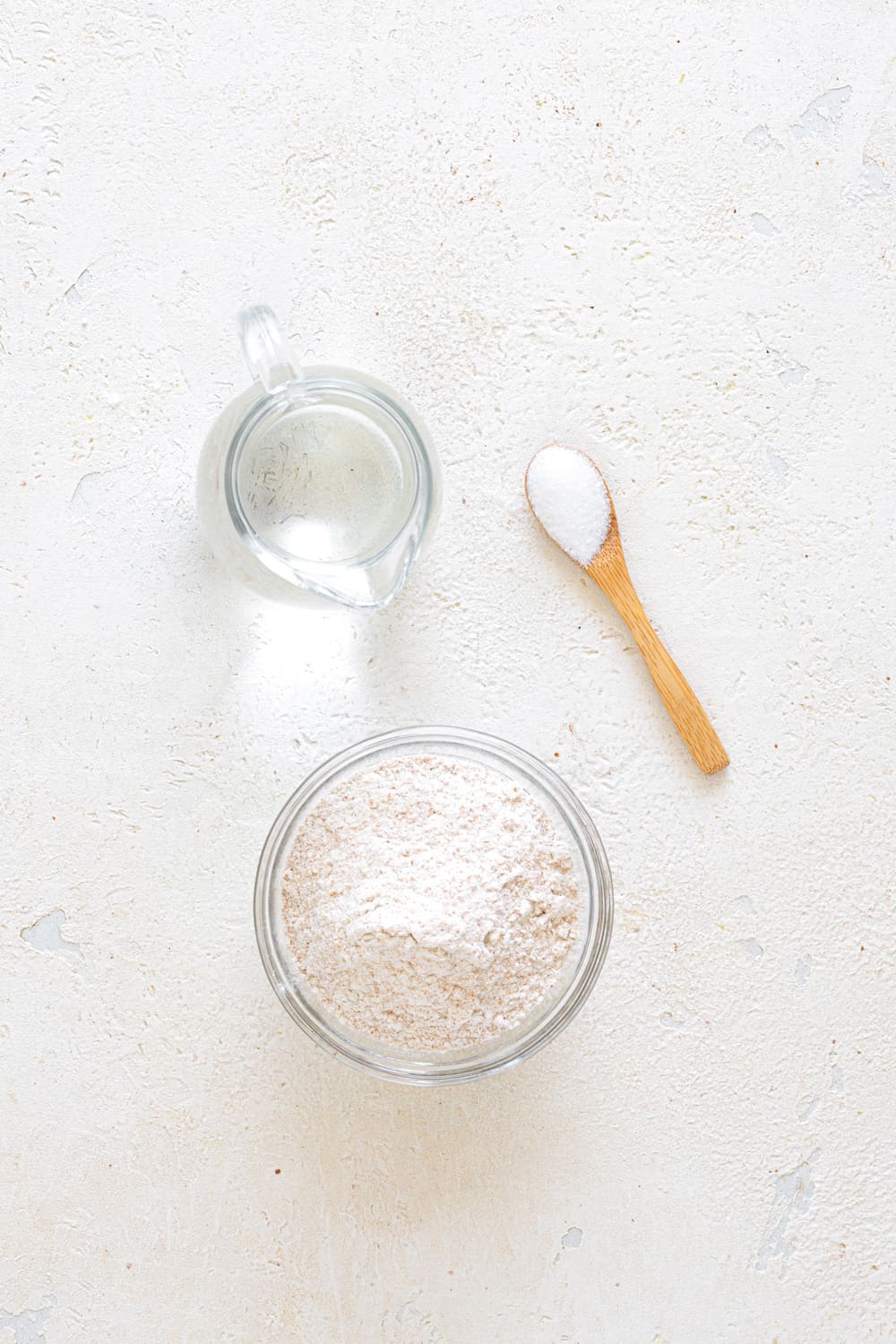
- 1⅓ cups plus 1 tablespoon warm water (330ml)
- 3½ cups whole wheat flour, plus approximately 1¼ cups more for rolling and working with the dough (430g plus 150g)
- 1 teaspoon salt (5g)
This makes around 7-8 flatbreads.
One important note: that extra flour isn’t necessarily all going into the dough. Keep it nearby and use as much as needed to prevent the dough from sticking while you roll it out.
How To Make It
I start with the warm water and salt in a large bowl, then gradually work in the whole wheat flour.
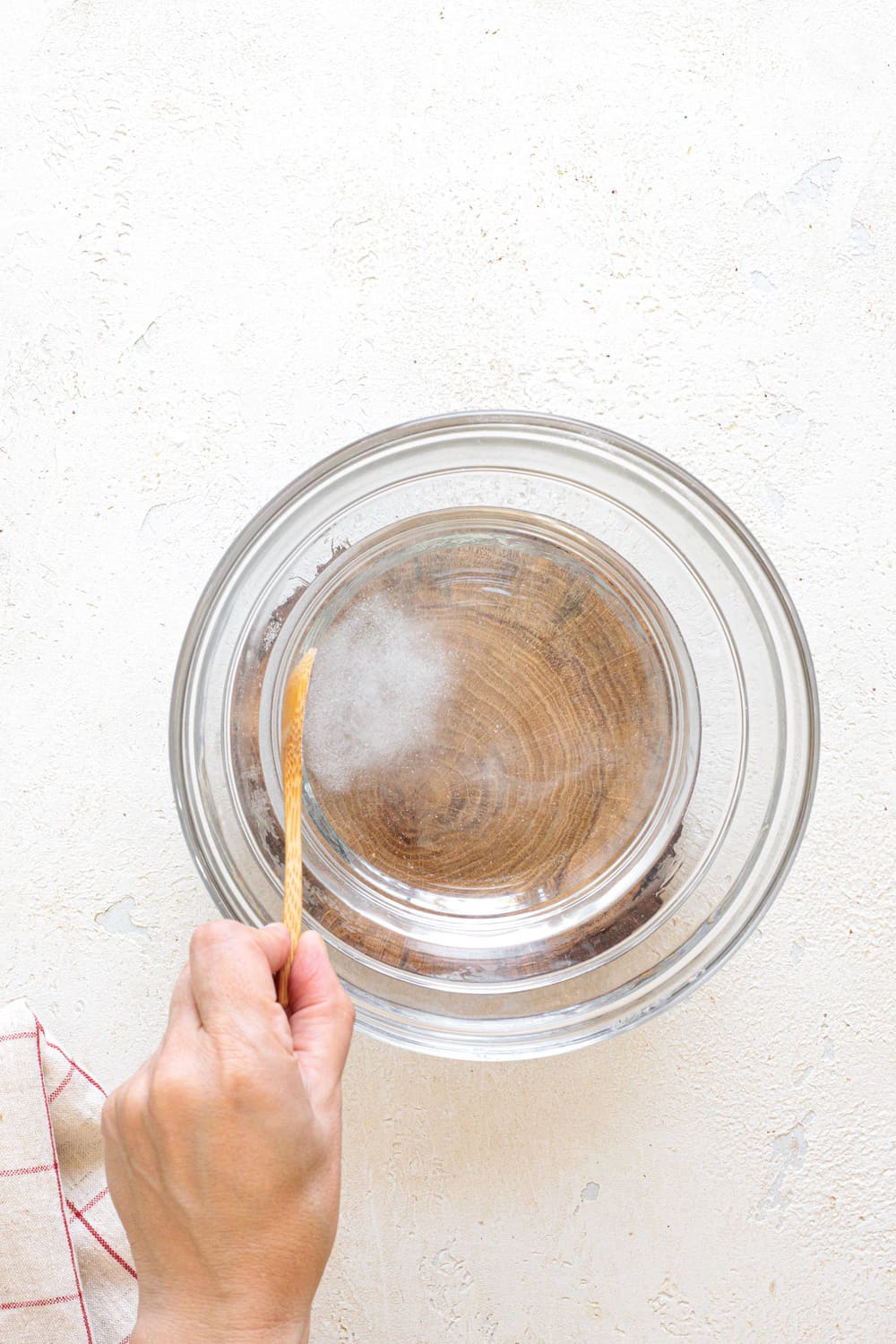
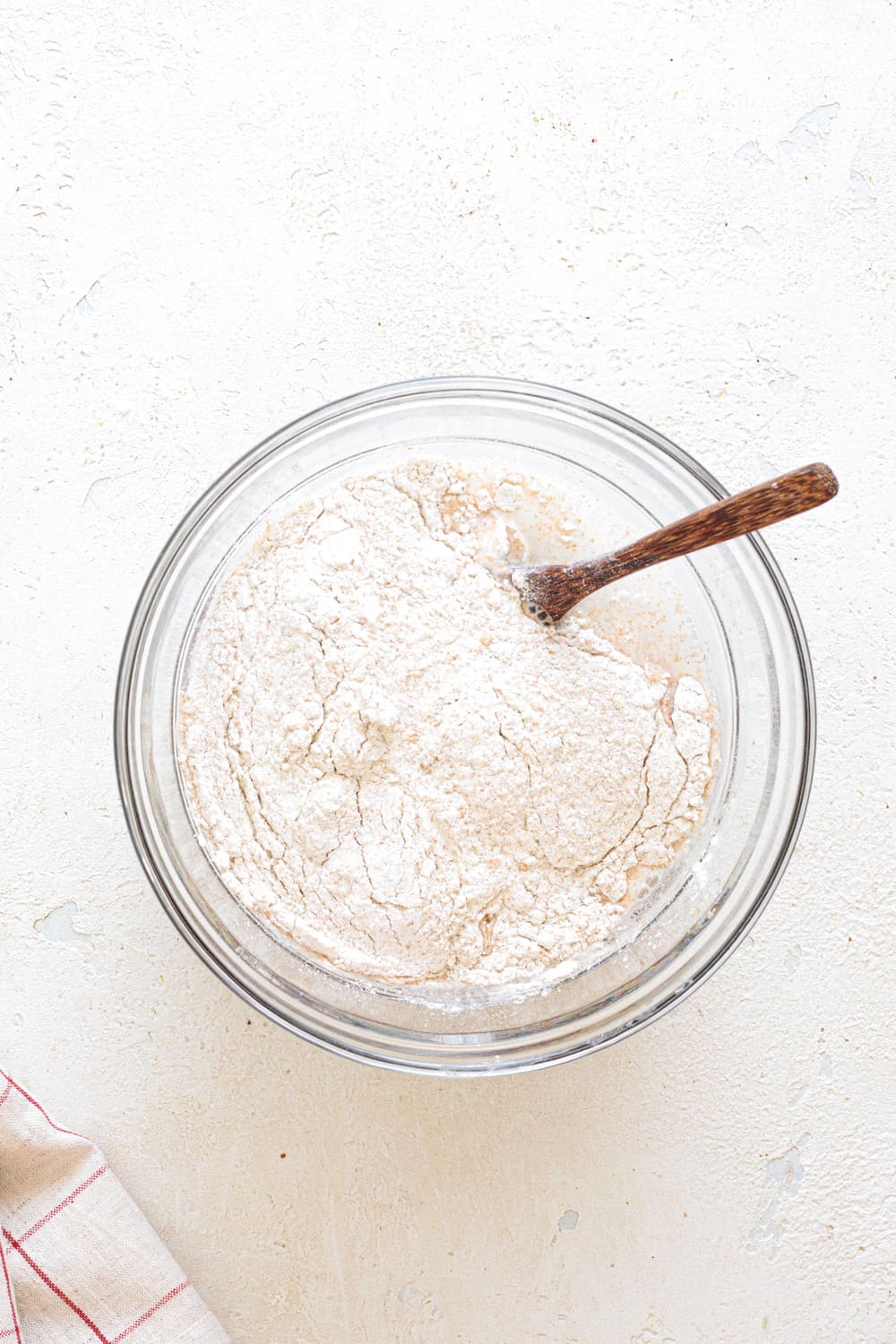
A spoon is useful at first. Your hands become considerably more useful once the dough starts looking like dough.
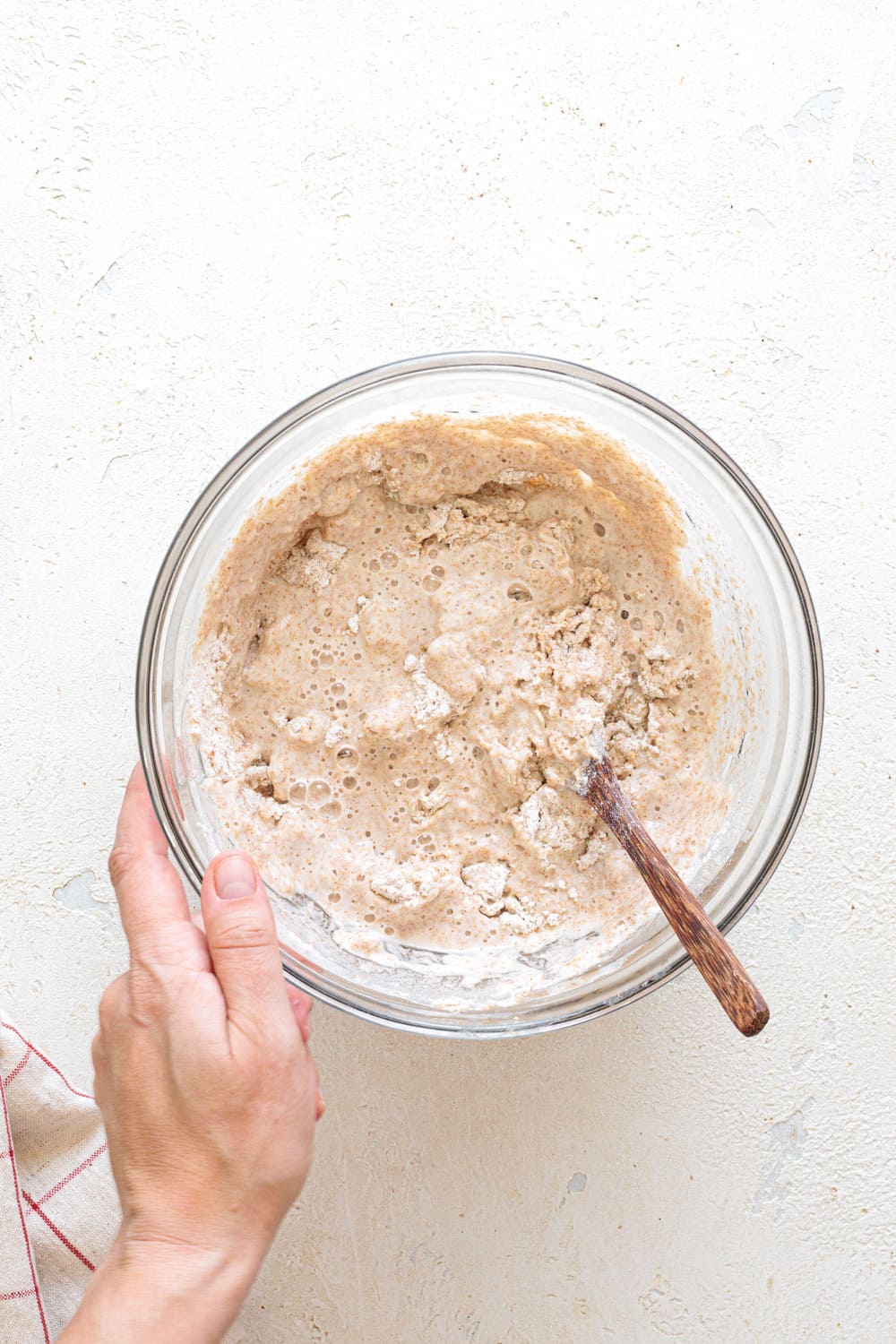
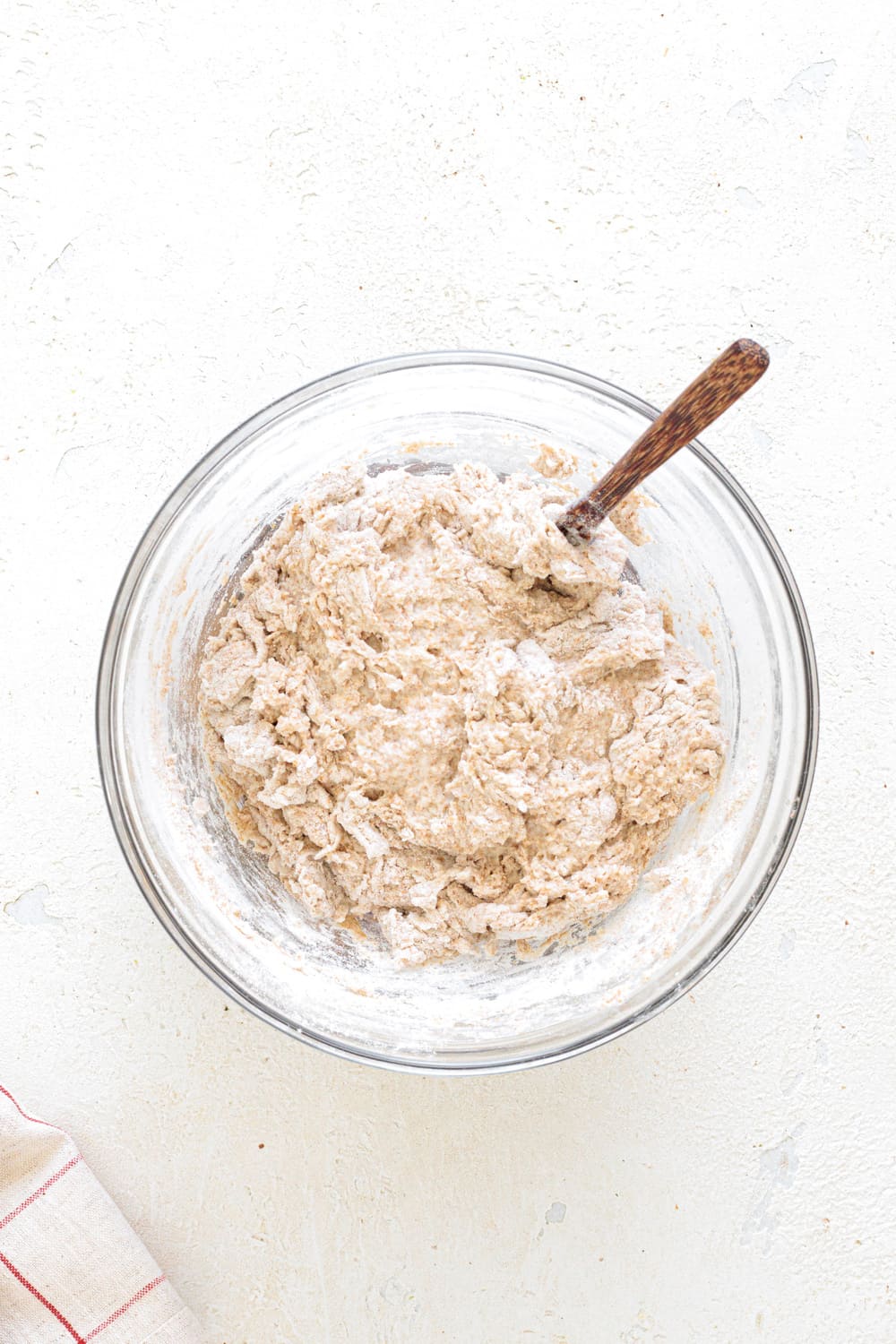
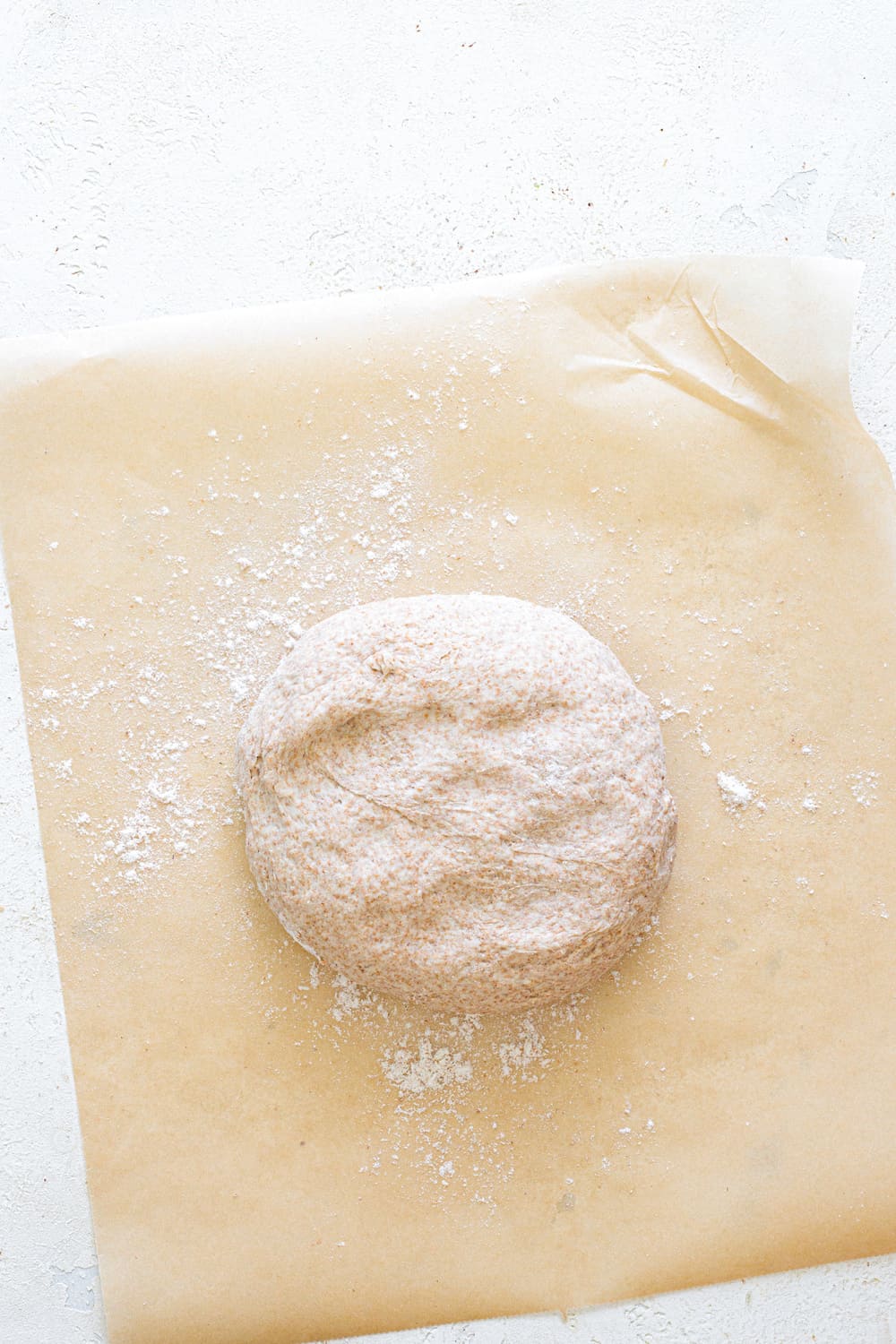
Once the dough comes together, I turn it out onto a lightly floured surface and knead it for about 5 minutes, until it’s soft and smooth.
I then divide the dough into 7 or 8 pieces.
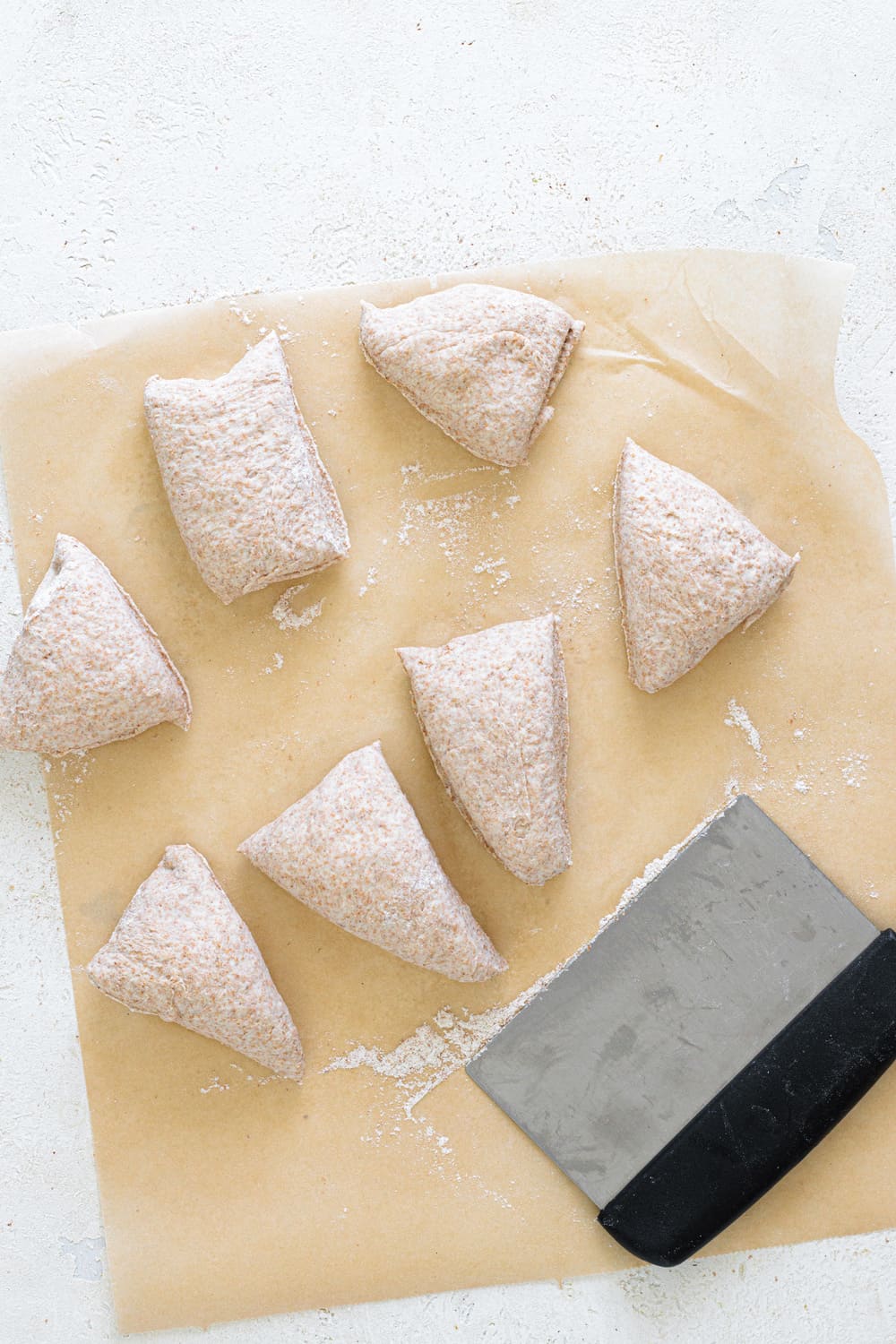
Then comes the part that matters most: rolling.
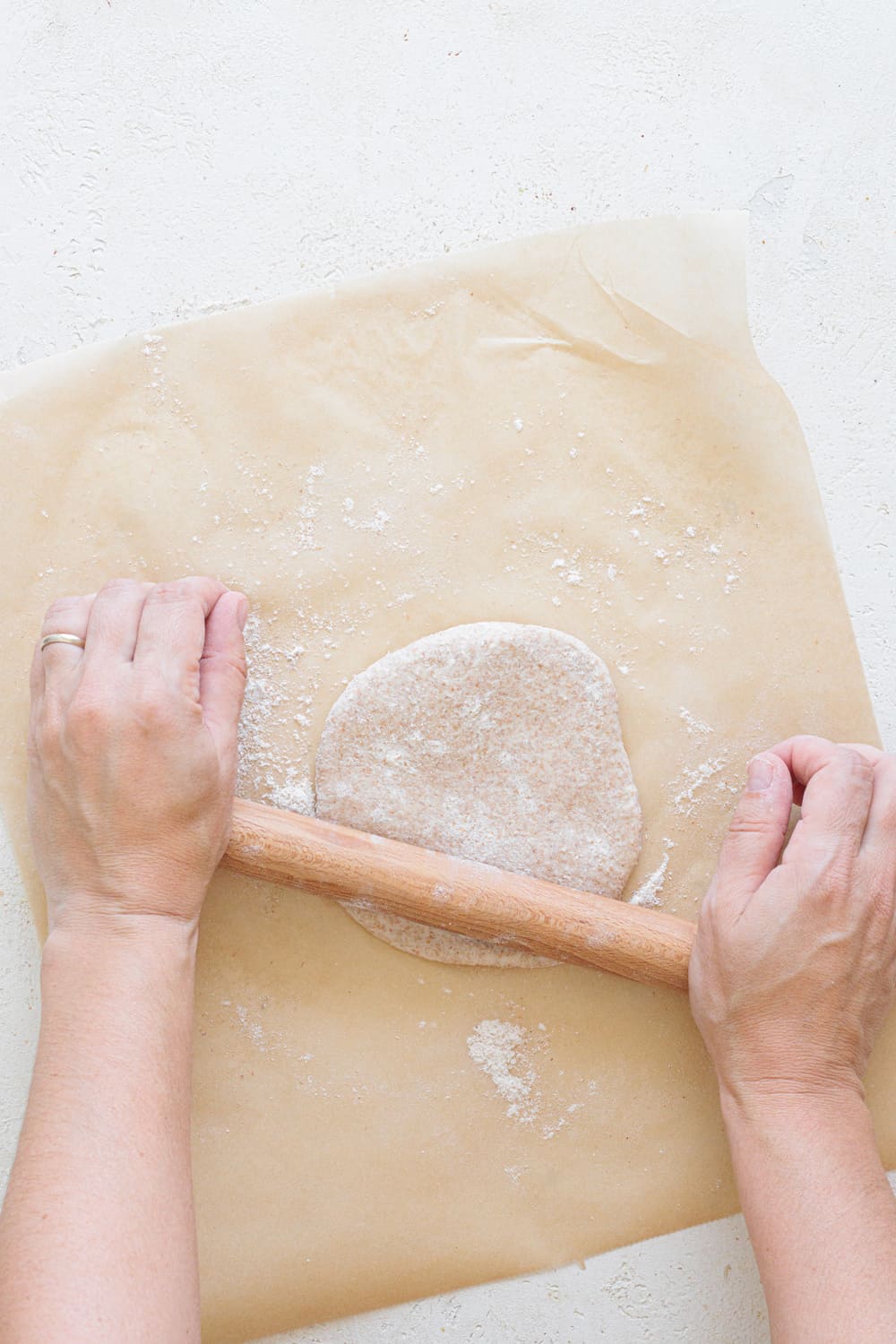
I flour the surface well and roll each piece from the center outward, turning and flipping it regularly. You’re looking for a very thin sheet of dough, not something resembling pita or a tortilla. Traditional flatbrød is supposed to be thin and crisp, so don’t be afraid to keep going.
I heat a large, dry griddle or skillet over medium heat. Each flatbread goes straight onto the hot surface and cooks for about 1-2 minutes, until light brown spots appear underneath. Then I flip it and cook the other side for another 1-2 minutes, until it develops similar spots and the bread starts to dry out.
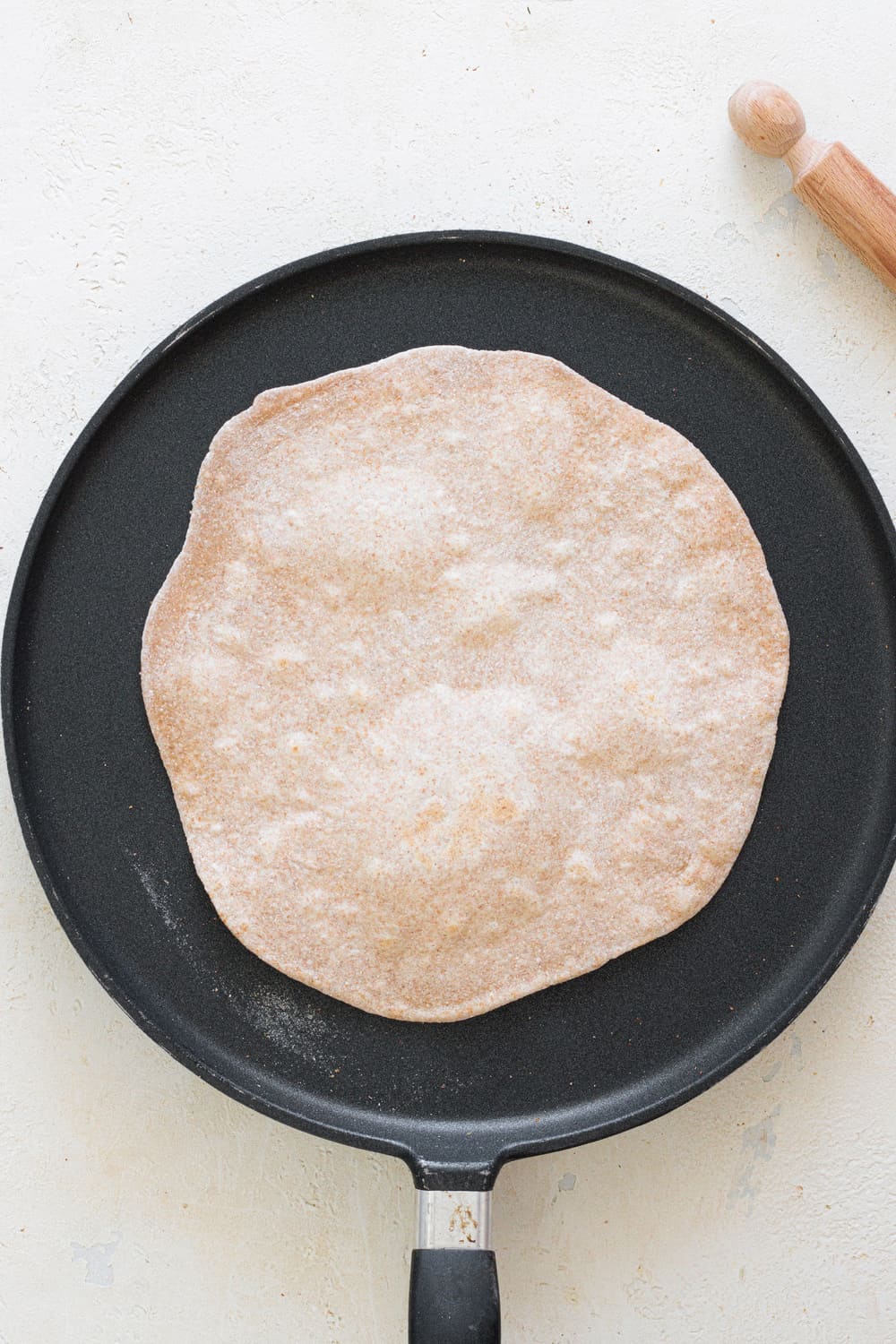
Before cooking the flatbreads, I preheat the oven to 200°F (95°C). As each one comes off the griddle, I transfer it to a baking sheet in the oven. The low heat helps remove any remaining moisture, giving the flatbreads that lovely dry crunch. I keep them in a single layer and let them cool on a wire rack once they’re crisp.
These crisp flatbreads are delicious with butter, cheese, or smoked salmon, and they also make a great accompaniment to soups and stews. If you’re craving something a little more substantial, Jorge’s Chicken Flatbread Pizza is another favorite.
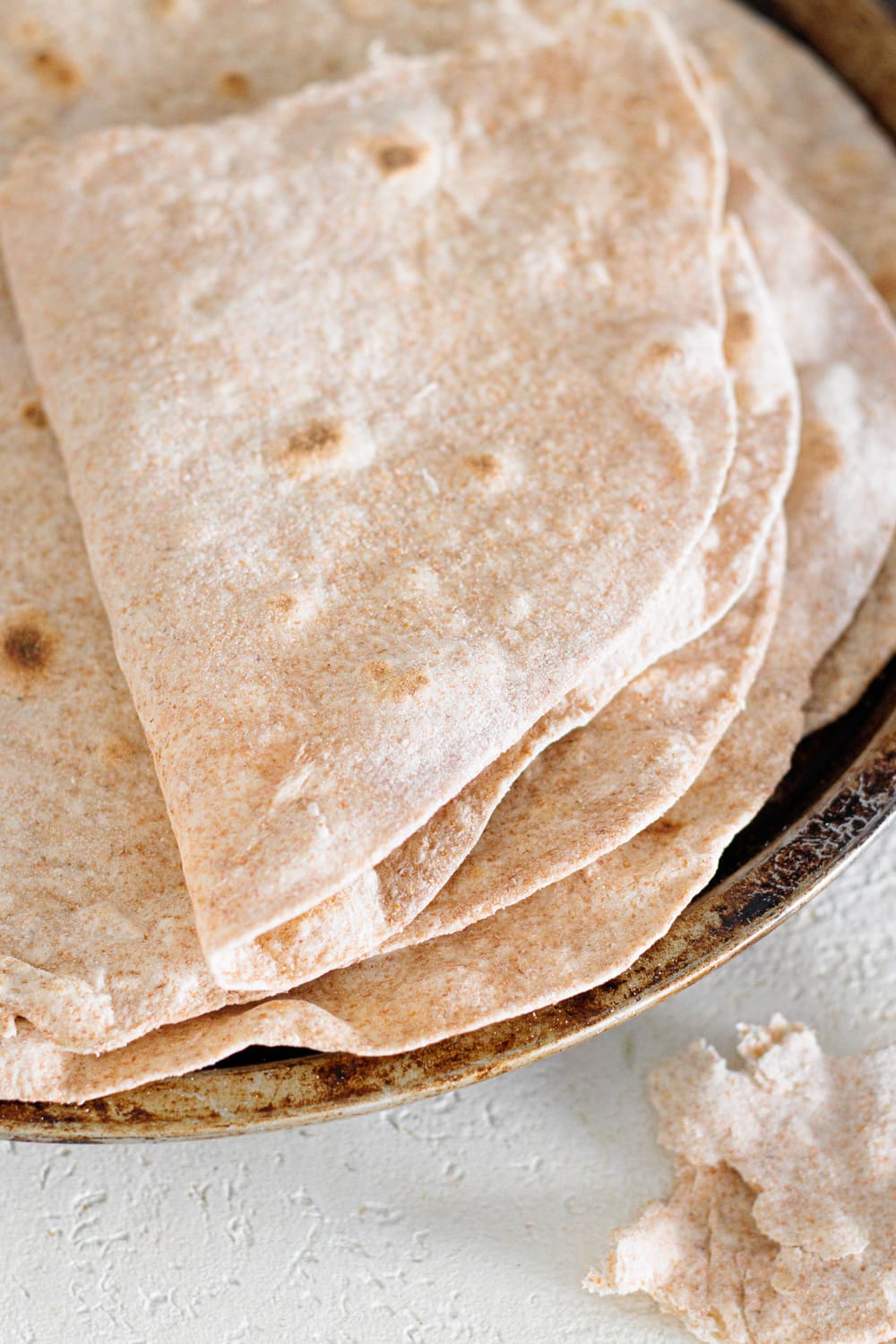
How Thin Is Thin?
Aim for about 1/16 inch (1-2 mm) thick, or as thin as you can roll the dough without tearing it. Basically thin enough that you’ll probably question whether you’ve gone too far. That’s usually where you stop.
Why is this step so important? If the flatbread is too thick, it’ll stay softer and chewier. That’s not necessarily unpleasant, but it’s not quite the crisp Norwegian flatbrød we’re after.
Use plenty of flour on the work surface, keep turning the dough as you roll, and don’t worry if your circles aren’t perfect. Mine rarely are, and nobody has ever refused a piece of flatbread because it wasn’t sufficiently circular.
If the dough keeps shrinking back as you roll it, cover it and let it rest for 10-15 minutes before trying again.
The Pan Needs to Be Hot
You want brown spots appearing relatively quickly without having to leave the bread in the pan long enough to become hard before it reaches the oven.
A griddle is ideal because it gives you plenty of room, but a large nonstick skillet works just as well. There’s no need to add oil. This is a dry pan situation.
If the flour left behind starts burning between batches, wipe it out carefully before cooking the next flatbread.
How to Store It
One of the original selling points of flatbrød was precisely how well it kept.
The important thing is to let it cool completely before storing it. Any trapped warmth creates moisture, and moisture is exactly what we don’t want when we’ve just gone to all this trouble to make crisp bread.
Once cool, keep the flatbread in an airtight container at room temperature. If a piece loses some of its crunch, a few minutes in a low oven should bring it back.
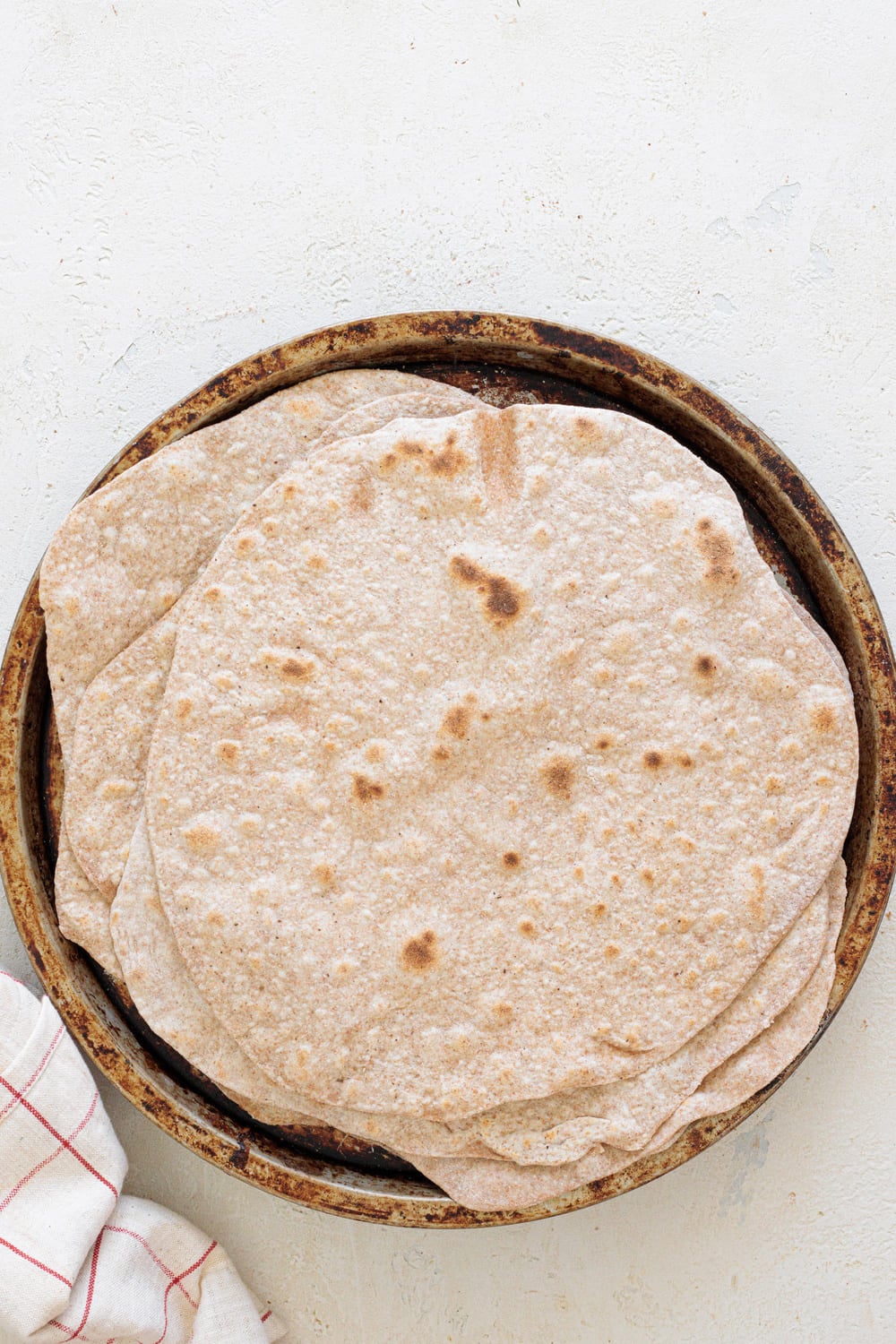

Norwegian Flatbread
Description
Traditional Norwegian flatbread, or flatbrød, made with just whole wheat flour, water and salt. Rolled paper-thin and cooked on a hot griddle, it's crisp, nutty and perfect with cheese, smoked salmon, soups and dips.
Ingredients
Instructions
-
Make the dough
Combine the warm water and salt in a large bowl. Gradually add the 3½ cups of whole wheat flour, mixing first with a spoon and then with your hands until a dough forms.
-
Knead until smooth
Transfer the dough to a lightly floured surface and knead for about 5 minutes, until soft and smooth. Add a little of the extra flour if needed to prevent sticking.
-
Divide the dough
Divide the dough into 7-8 equal portions and shape each into a ball.
-
Heat the oven and griddle
Preheat the oven to 200°F (95°C). Heat a dry griddle or large nonstick skillet over medium-high heat.
-
Roll it thin
On a well-floured surface, roll each ball into a very thin sheet, about 1/16 inch (1-2 mm) thick. Turn and flip the dough regularly to prevent sticking.
-
Cook the flatbread
Place each flatbread on the hot, dry griddle. Cook for about 1-2 minutes per side, until light brown spots appear and the bread begins to dry out.
-
Keep warm and crisp
Transfer the cooked flatbreads to baking sheets in the warm oven, keeping them in a single layer. Let them dry out while you cook the remaining flatbreads.
-
Cool completely
Transfer the flatbreads to a wire rack and let them cool completely. Store in an airtight container once fully crisp and dry.
Nutrition Facts
Servings 8
- Amount Per Serving
- Calories 185kcal
- % Daily Value *
- Total Fat 1.5g3%
- Saturated Fat 0.2g1%
- Sodium 245mg11%
- Potassium 210mg6%
- Total Carbohydrate 39g13%
- Dietary Fiber 6g24%
- Sugars 0.3g
- Protein 7g15%
- Calcium 20 mg
- Iron 2 mg
* Percent Daily Values are based on a 2,000 calorie diet. Your daily value may be higher or lower depending on your calorie needs.