

There are some recipes you learn because you want to make one specific thing. And then there are recipes that quietly give you access to about fifty other desserts.
Pastry cream is the second kind.
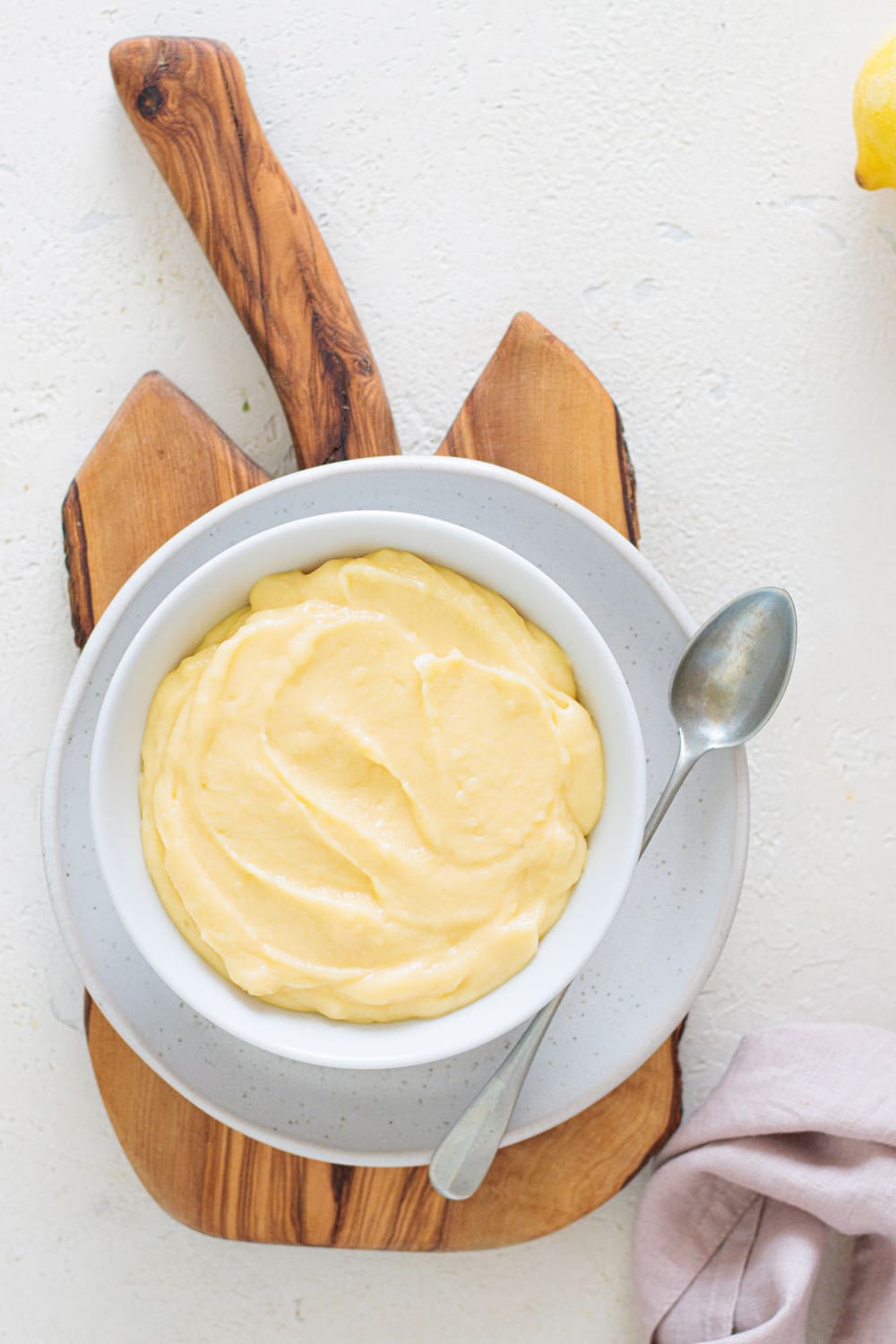
Once you know how to make it, you start looking at things differently. Puff pastry? Could fill that. Tart shell? Obviously. Cake that seems a little boring? Give me five minutes.
I use it in my Millefoglie, but I strongly recommend learning the recipe independently of whatever dessert brought you here.
Because once there’s a bowl of cold pastry cream in the fridge, you’ll find something to do with it.
Ingredients for My Pastry Cream
Ingredients for this pastry cream are not particularly fancy. The technique does most of the work here.
This is what you’ll need:
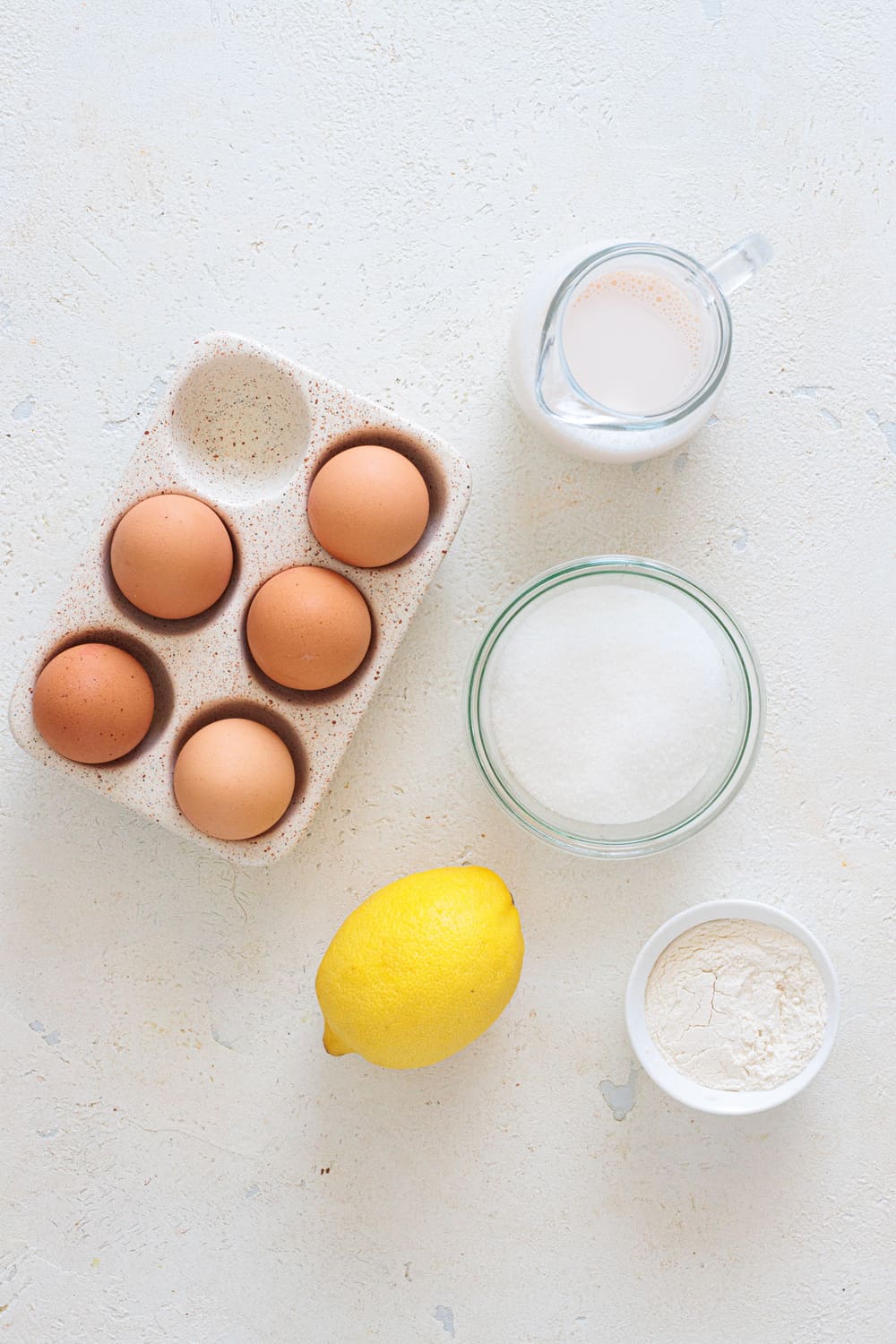
- ⅓ cup + 2 tablespoons granulated sugar (90g)
- Finely grated zest of 1 lemon or orange
- 5 large egg yolks
- ⅓ cup cornstarch (40g)
- 2 cups + 2 tablespoons whole milk (500ml)
Makes approximately 2½ cups (650-700 g) of pastry cream.
How To Make It
I start with something that might seem like an unnecessary extra step but absolutely isn’t: rubbing the lemon zest into the sugar with my fingers. Within a few seconds, the sugar starts taking on the color of the zest and smelling intensely citrusy.
That’s the zest releasing its oils, and it’s a much better way of getting the citrus flavor into the cream than simply throwing everything into the bowl together. Then I add the egg yolks.
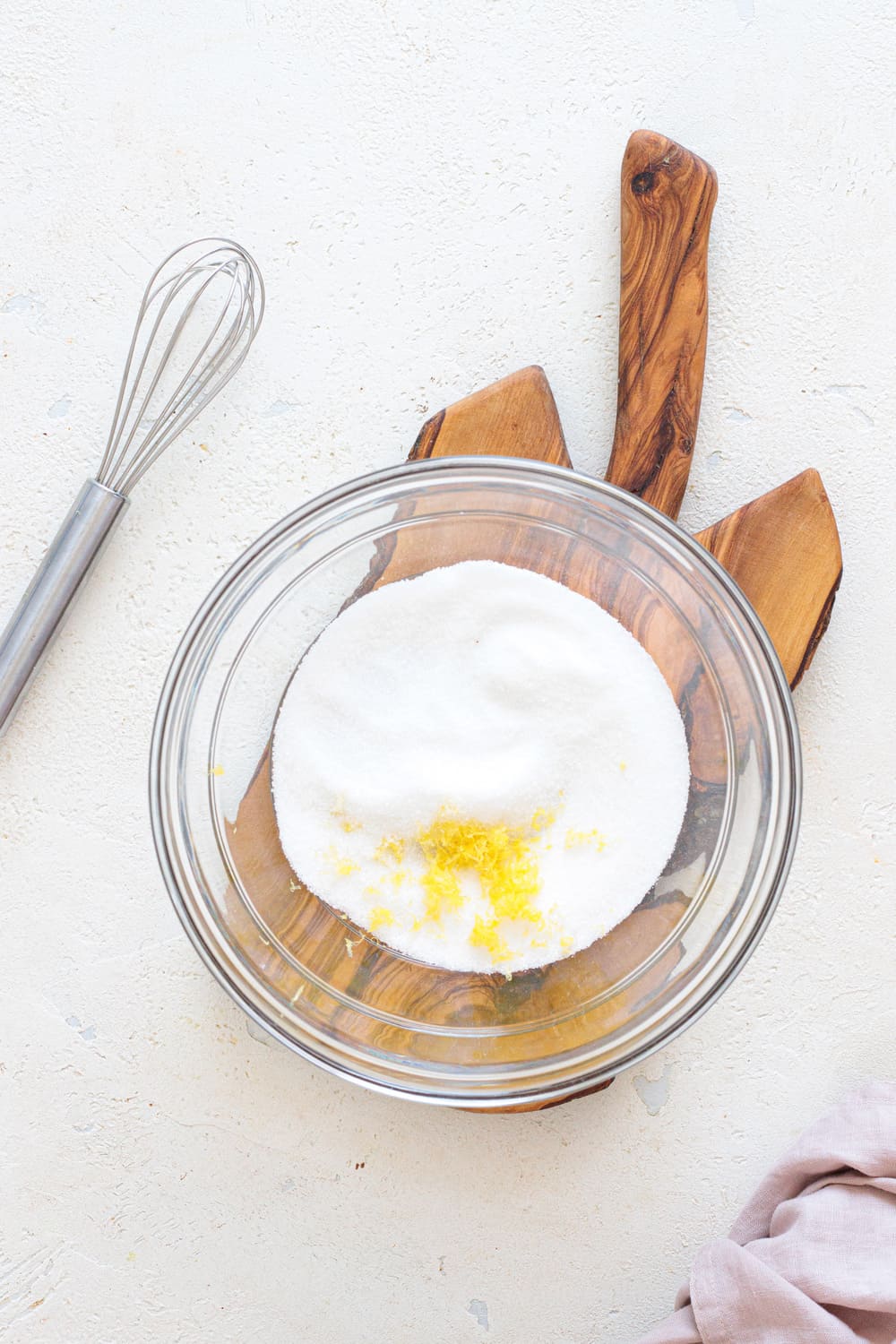
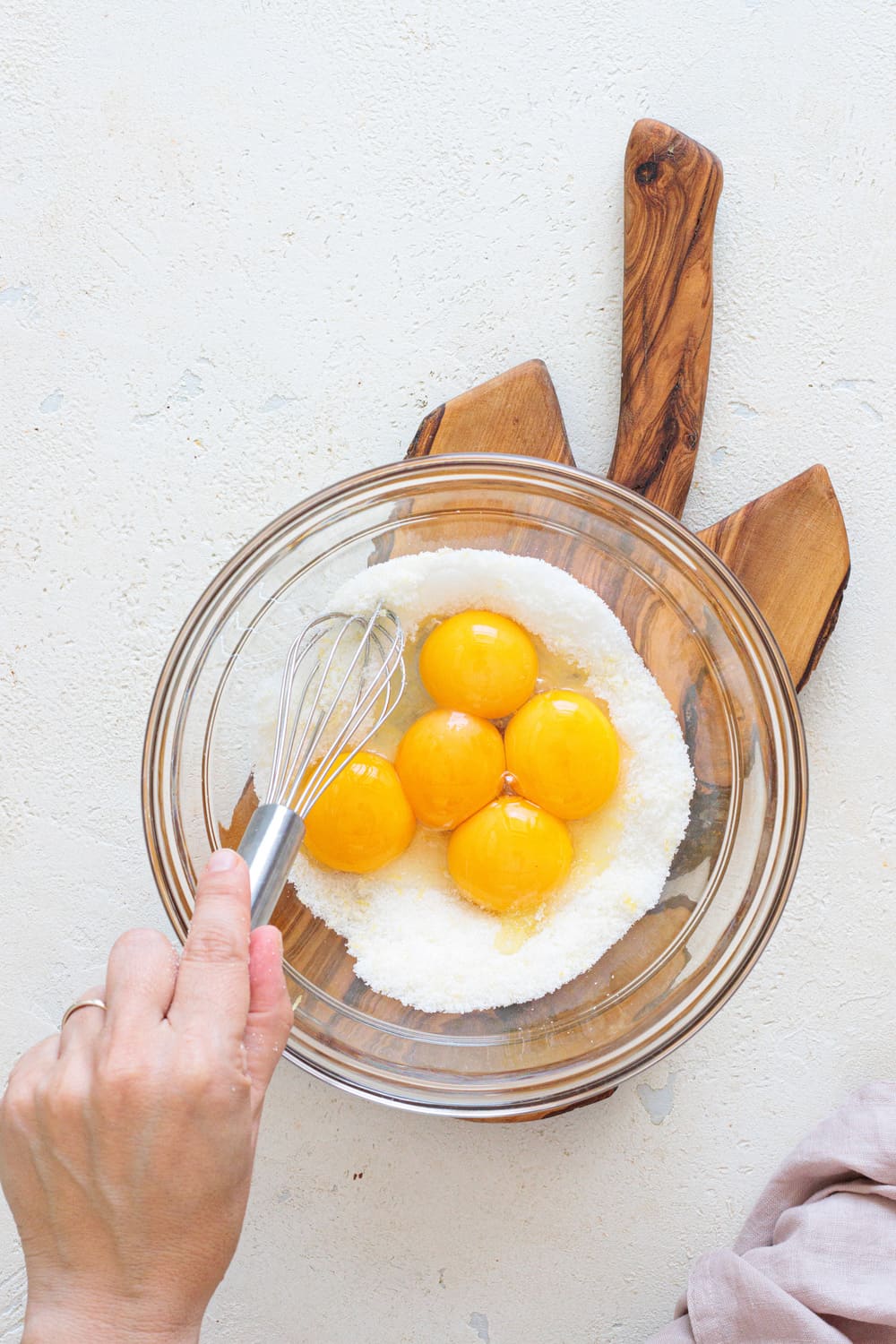
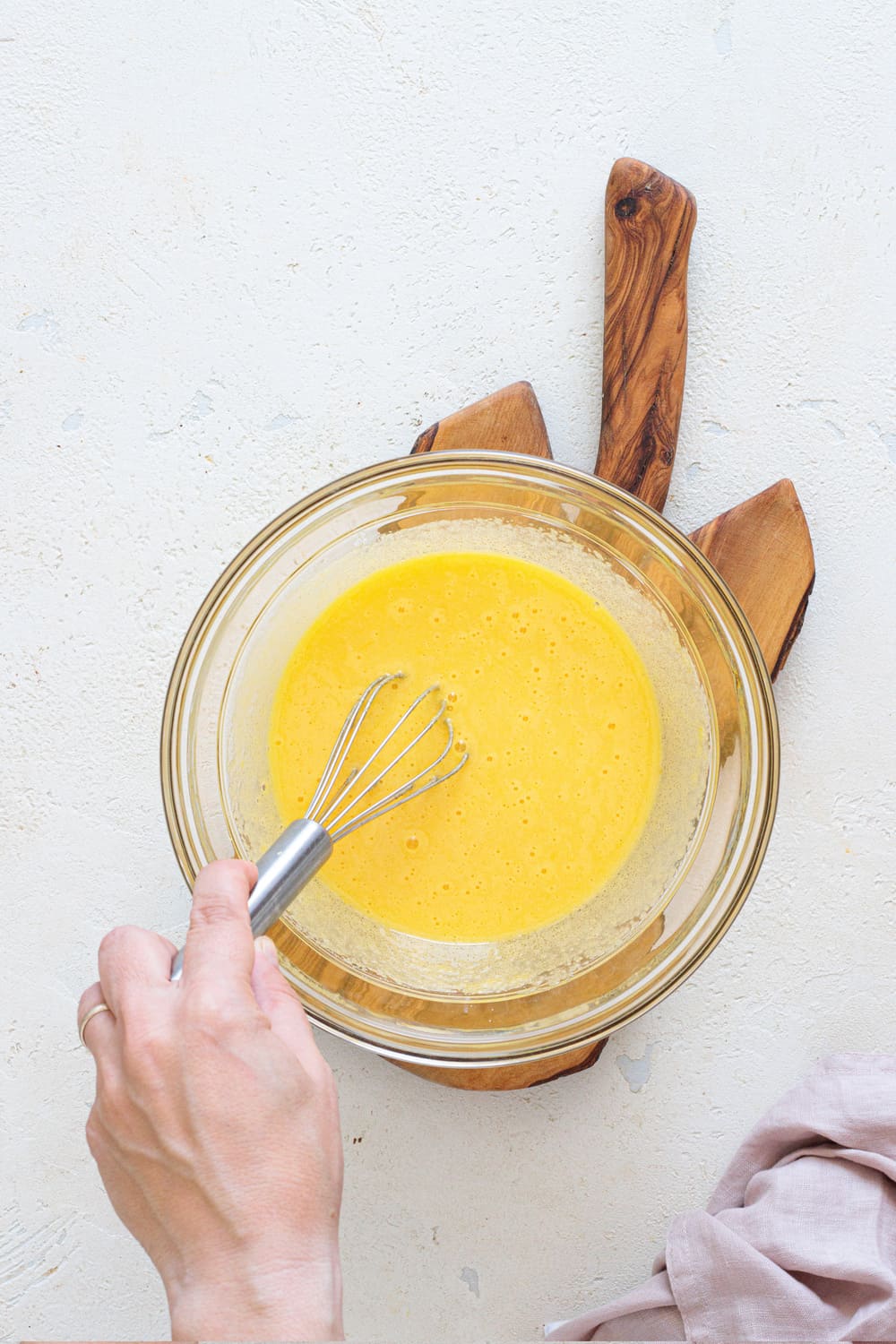
Whisk the lemony sugar and egg yolks until the mixture becomes lighter and a little fluffy.
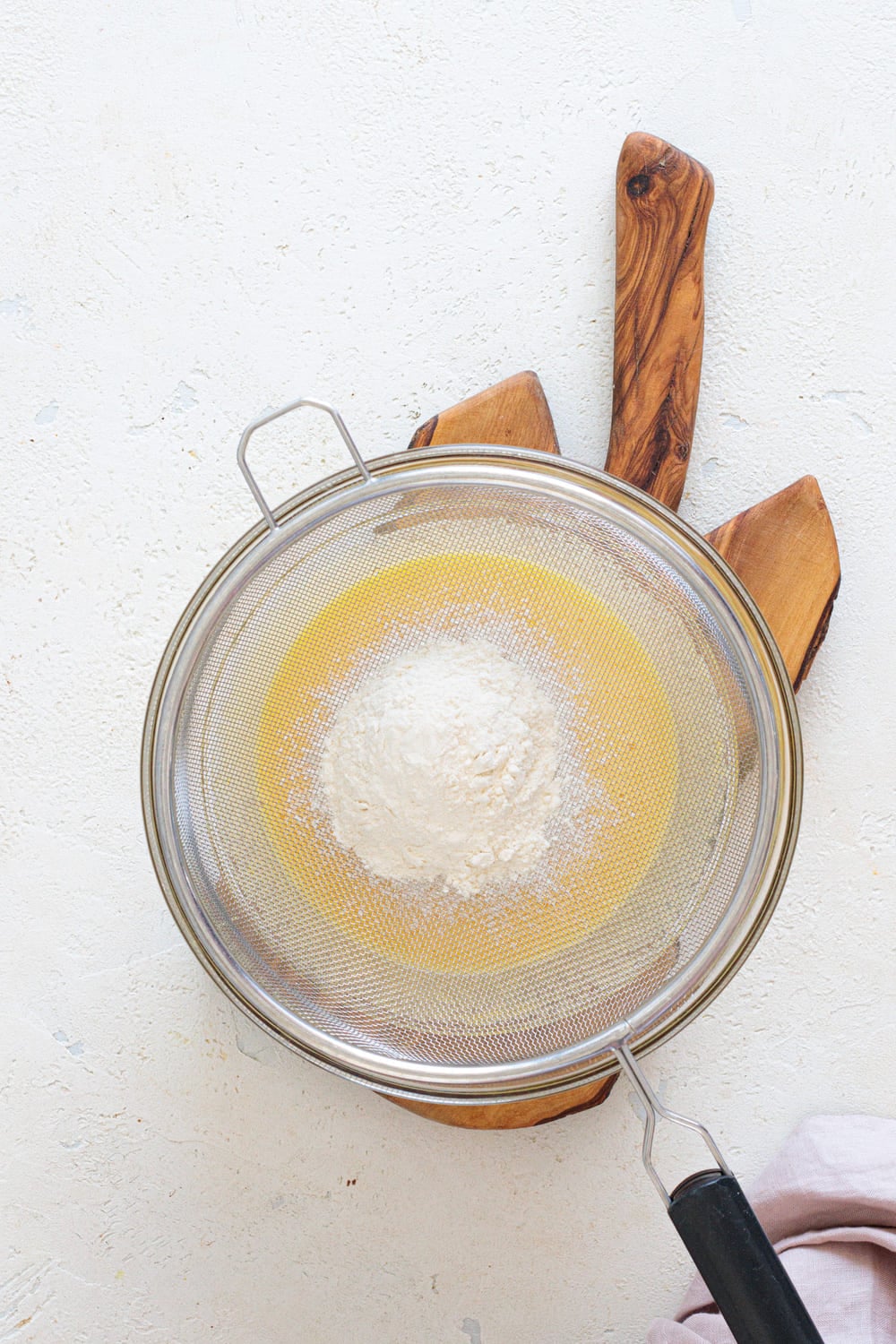
The cornstarch goes in next. I sift it into the egg mixture and whisk until smooth, so I’m not spending the next five minutes chasing tiny white lumps around the bowl.
Meanwhile, I warm the milk in a saucepan. Warm, not boiling. We’re making pastry cream, not scrambled eggs.
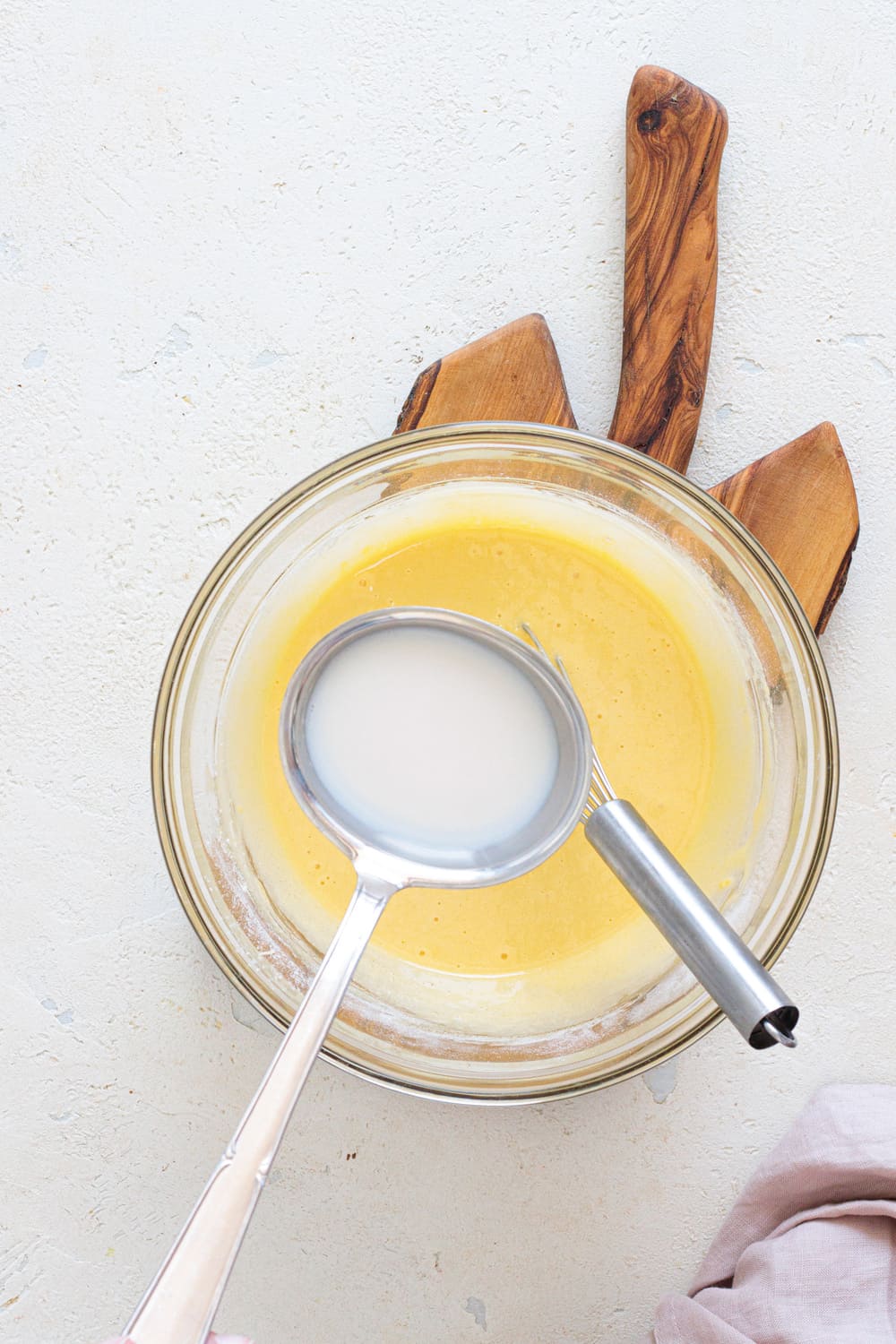
I whisk one ladleful of the warm milk into the yolk mixture first. This brings the temperature up gradually before everything goes back into the saucepan.
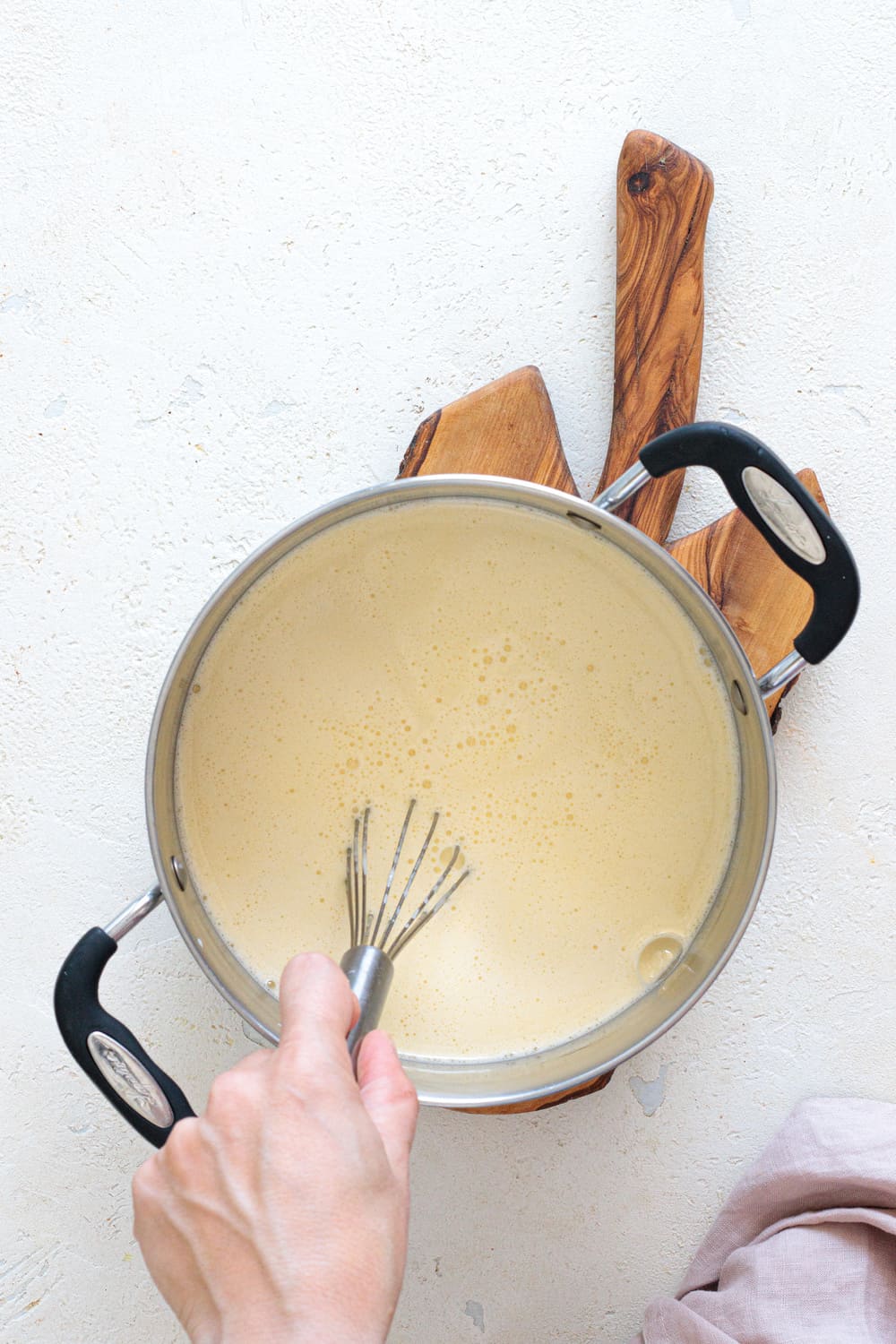
Then I cook it over low heat, whisking constantly.
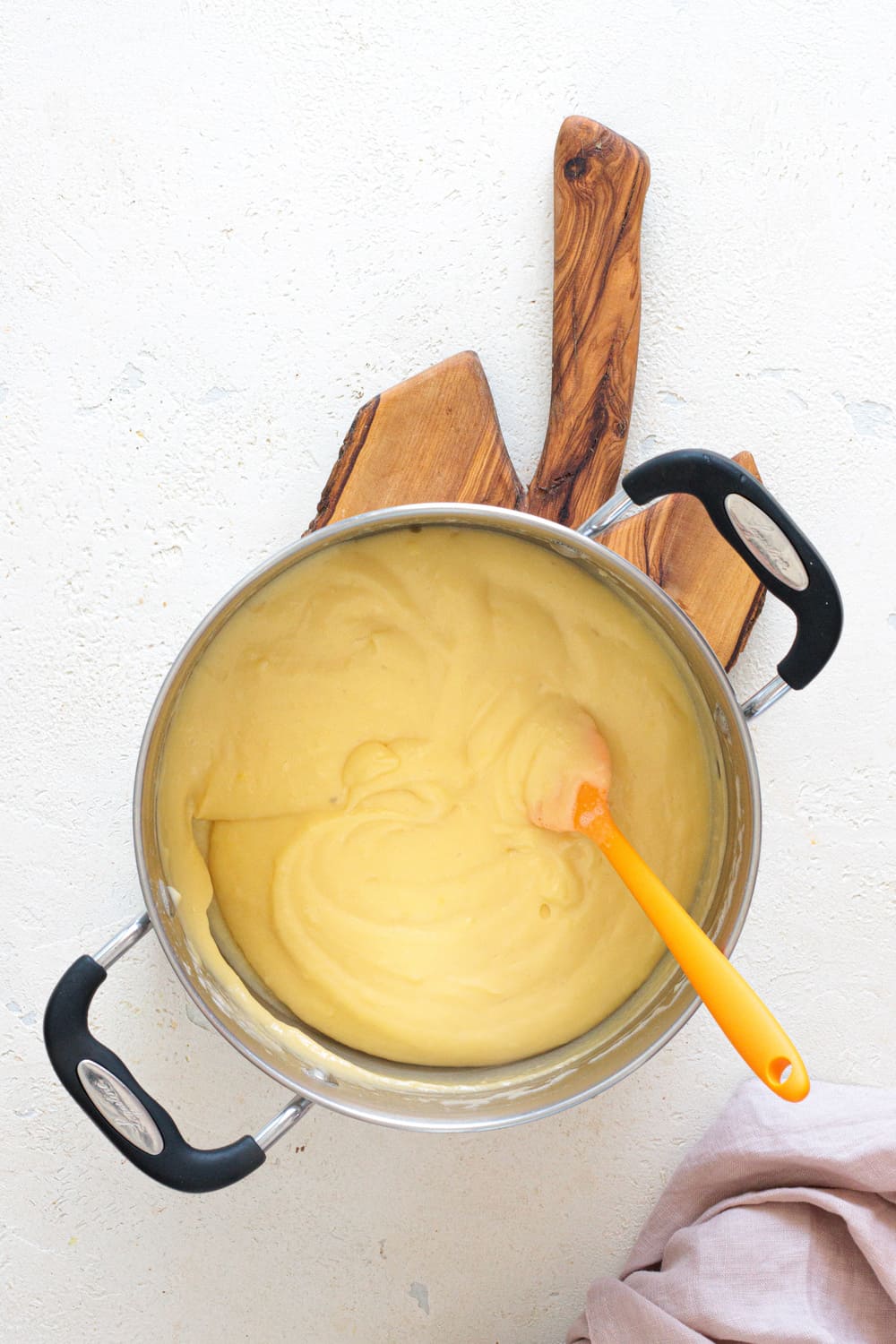
This is the part where absolutely nothing seems to be happening… until suddenly everything is happening. The mixture starts thickening quickly, and once it begins to bubble, I keep whisking for another minute to make sure the cornstarch is fully cooked before taking it off the heat.
I immediately pour it into a wide, shallow dish, smooth the top and press plastic wrap directly against the surface.
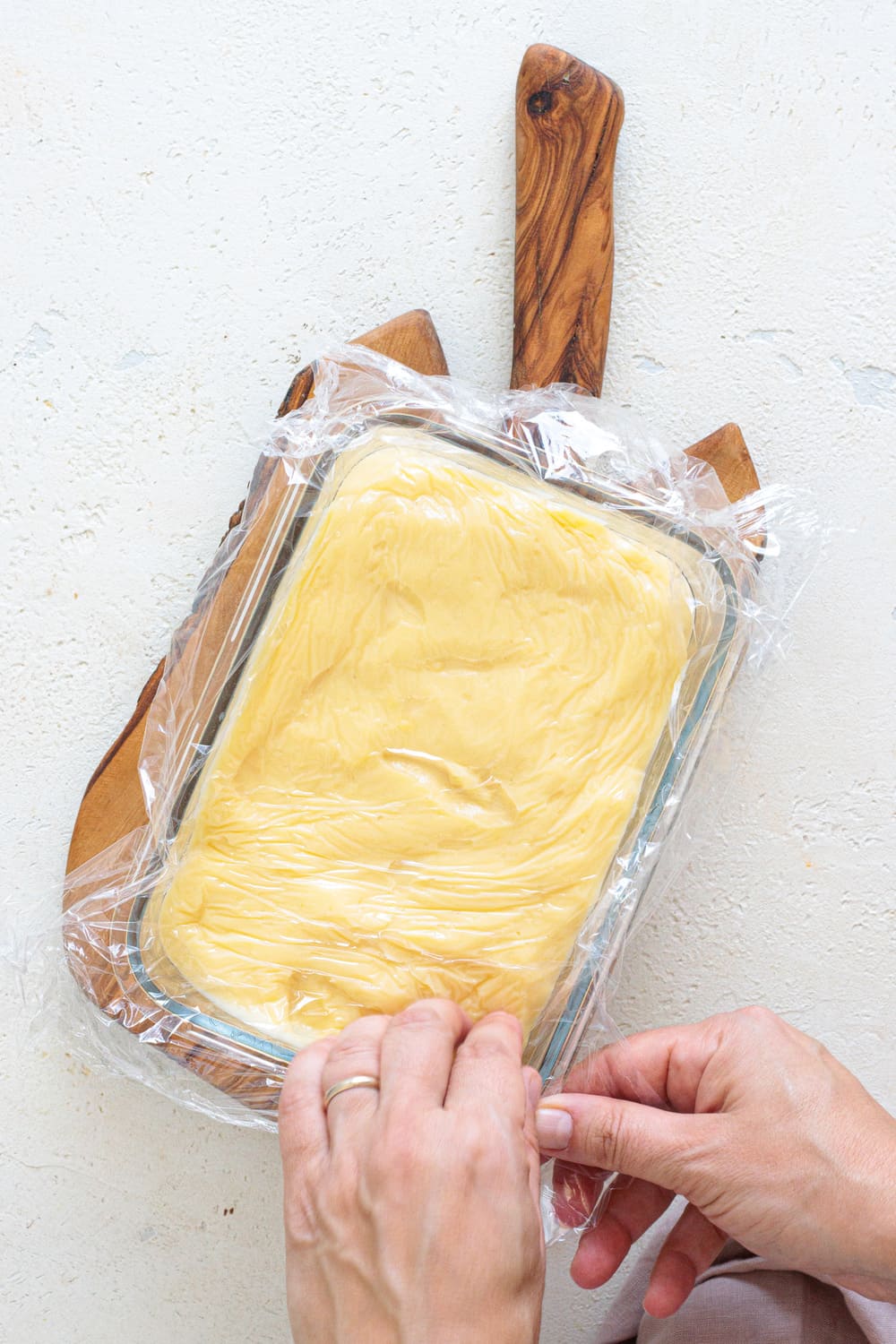
Then comes the difficult part: putting it straight into the fridge and leaving it alone until it’s completely cold, at least 4 hours.
Tips & Tricks for Perfect Pastry Cream
- Rub the zest into the sugar. Don’t just stir them together. Use your fingertips to really work the zest into the sugar until it becomes slightly yellow and smells intensely citrusy. You’re releasing all those oils from the peel.
- Stick with cornstarch if you can. Flour works, but cornstarch gives you a smoother, lighter cream without adding any floury taste.
- Don’t boil the milk. You only need it warm. If it’s bubbling away before it meets the eggs, you’ve gone further than necessary.
- Temper the yolks first. Add one ladle of warm milk to the egg mixture and whisk before pouring everything back into the saucepan. Much safer than introducing cold eggs directly to a pan of hot milk.
- Once it’s on the stove, don’t wander off. Whisk constantly over low heat, particularly around the bottom and corners of the pan. It can go from looking far too liquid to properly thick in surprisingly little time.
- Look for the bubbles. Once the cream has thickened and starts to bubble, keep whisking for another minute to cook the cornstarch properly. Then take it off the heat.
- Get it out of the hot pan. Transfer the pastry cream immediately to a wide, shallow dish. It cools faster and stops cooking sooner.
- Yes, the plastic wrap actually touches the cream. Press it directly against the entire surface rather than stretching it across the top of the dish. This is what prevents that rubbery skin from forming.
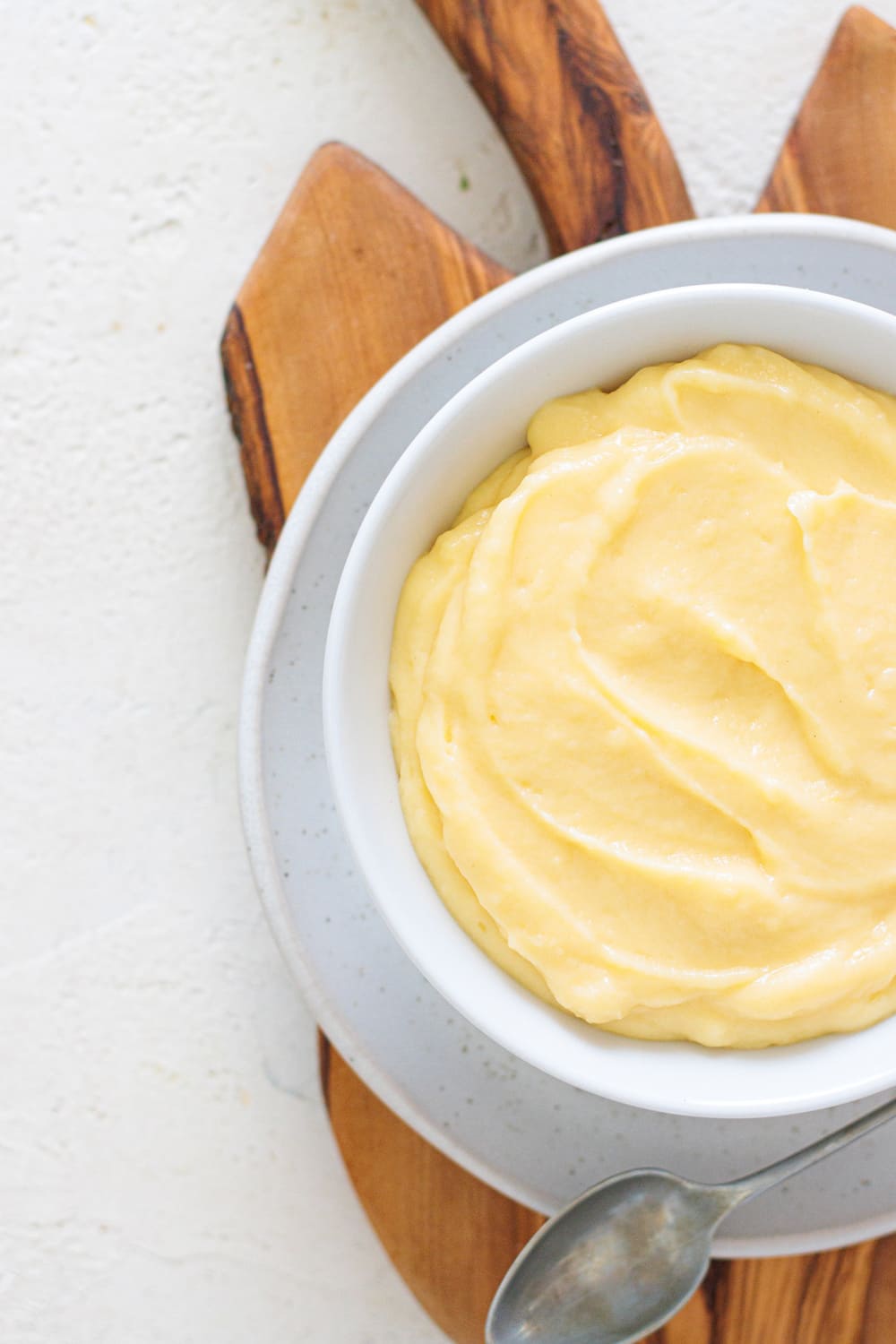
- Let it get completely cold. Pastry cream thickens and sets as it chills. Before using it, give it a quick whisk to bring it back to that lovely smooth, silky consistency.
- Make it ahead. It keeps well covered in the refrigerator for about 3 days, so there’s absolutely no reason to be making pastry cream while simultaneously trying to assemble whatever dessert it’s going into.
What Can I Make With Pastry Cream?
This is where having a container of pastry cream in the fridge becomes dangerous.
Use it to fill cream puffs, éclairs, fruit tarts, croissants or cakes. Spoon it into tart shells and cover it with berries. Put it between layers of sponge cake or try serving it with Rita’s Easy Overnight French Toast Casserole for a breakfast that’s definitely leaning into dessert territory.
You can also just eat a spoonful directly from the fridge while deciding what to make with the rest.
I believe that still counts as recipe development.
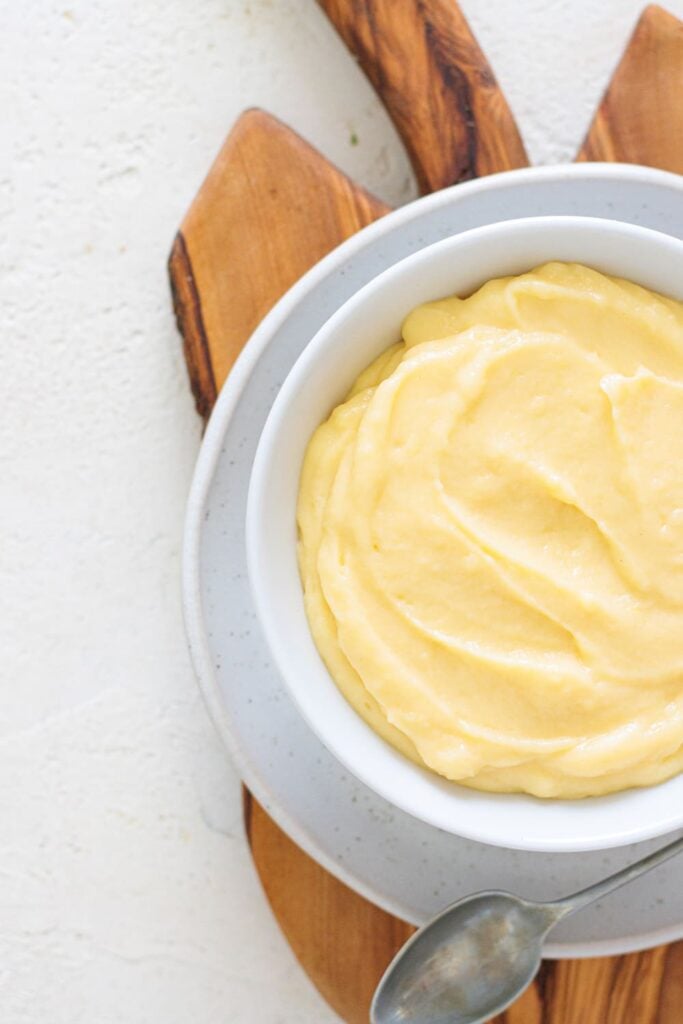

Pastry Cream
Description
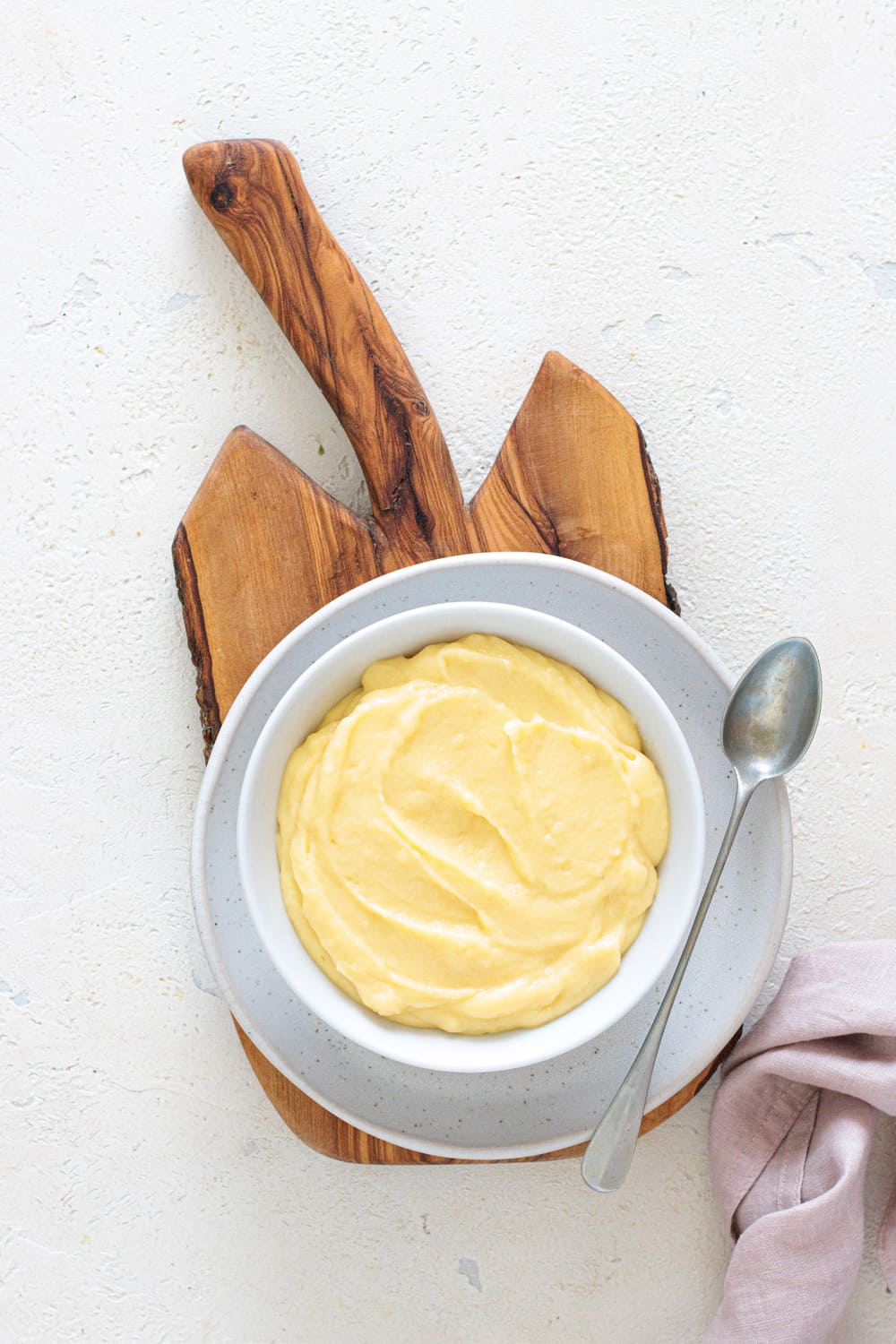
A classic homemade pastry cream made with egg yolks, whole milk, and fresh lemon zest. Thick, silky, and lightly citrusy, it’s perfect for filling cakes, tarts, pastries, and Millefoglie.
Ingredients
Instructions
-
Flavor the sugar
Combine the sugar and lemon zest in a bowl. Rub them together with your fingertips until the sugar becomes fragrant and slightly yellow. -
Whisk the egg yolks
Add the egg yolks and whisk until pale and fluffy.
-
Add the cornstarch
Sift in the cornstarch and whisk until completely smooth.
-
Warm the milk
Heat the milk in a saucepan until warm, but do not let it boil. -
Temper the eggs
Whisk one ladleful of warm milk into the egg mixture to temper it.
-
Combine everything
Pour the egg mixture back into the saucepan with the remaining milk. -
Cook until thickened
Cook over low heat, whisking constantly, until the cream thickens and begins to bubble. Keep whisking for 1 more minute, then remove from the heat. -
Transfer the cream
Immediately transfer the pastry cream to a wide, shallow dish. -
Cover and cool
Press plastic wrap directly against the surface and refrigerate until completely cold before using.
Nutrition Facts
Servings 8
- Amount Per Serving
- Calories 1150kcal
- % Daily Value *
- Total Fat 42g65%
- Saturated Fat 19g95%
- Cholesterol 1030mg344%
- Sodium 270mg12%
- Potassium 900mg26%
- Total Carbohydrate 159g53%
- Sugars 114g
- Protein 35g70%
- Calcium 680 mg
- Iron 5 mg
* Percent Daily Values are based on a 2,000 calorie diet. Your daily value may be higher or lower depending on your calorie needs.