

There’s something very satisfying about putting dinner in the fridge at lunchtime and knowing it’s quietly getting better without you.
That’s basically the entire job of this steak marinade.
I mix everything together, add the steaks and then leave them alone for a few hours while the mustard, soy sauce, Worcestershire, vinegar, garlic and onion get to work. By the time I come back, there’s very little left for me to do beyond getting a pan extremely hot.
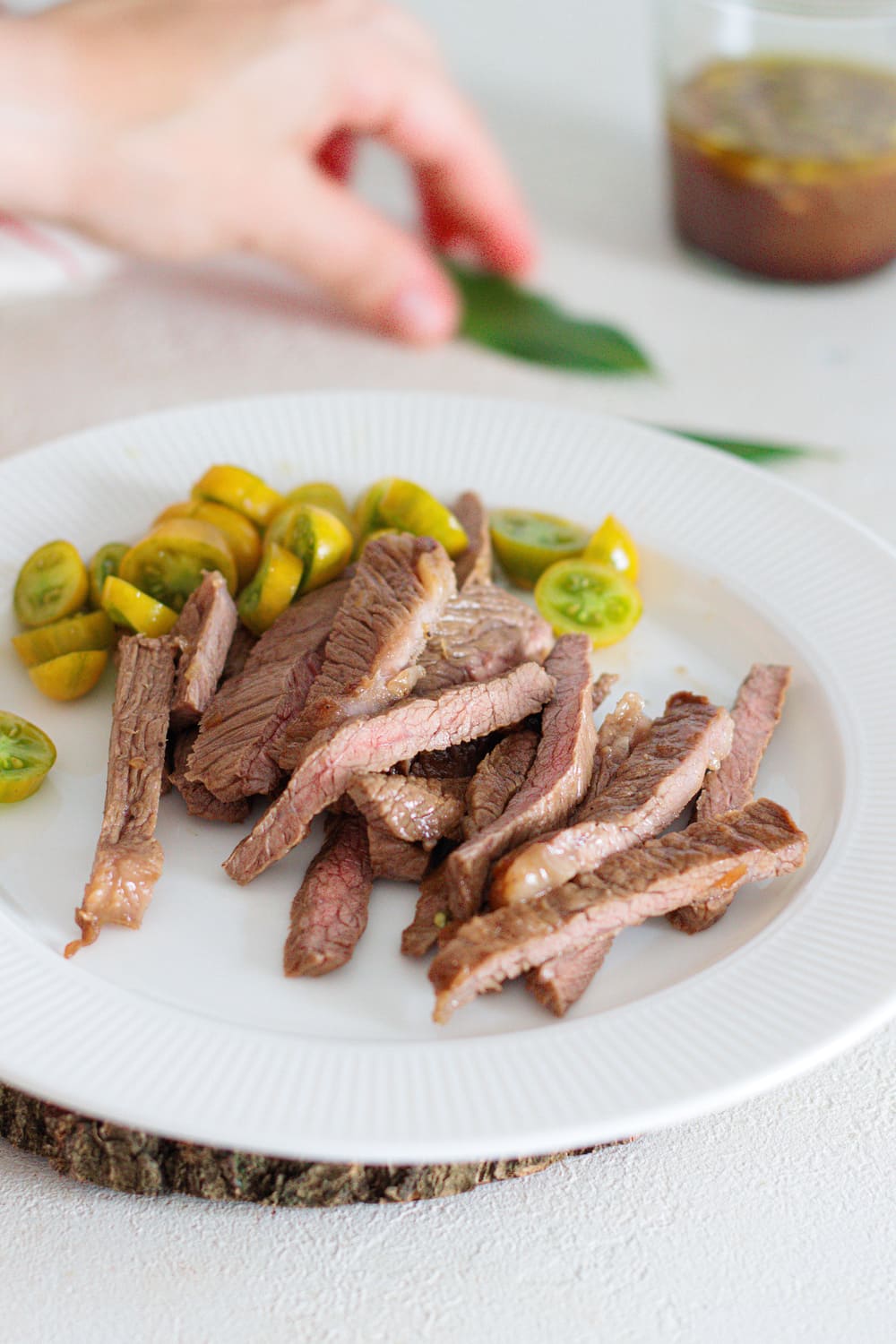
And that’s probably my favorite thing about marinating steak. All the effort happens when you’re not actually hungry yet.
Then, when you are, it’s steaks in the pan, a few minutes of cooking, five slightly impatient minutes of resting, and dinner.
The fact that this works particularly well with more affordable cuts? Even better.
Ingredients for My Steak Marinade for Tender Steak
There are a few ingredients in this marinade, but most are things you probably already have somewhere in the kitchen.
Here’s everything you’ll be needing to prepare my steak marinade:
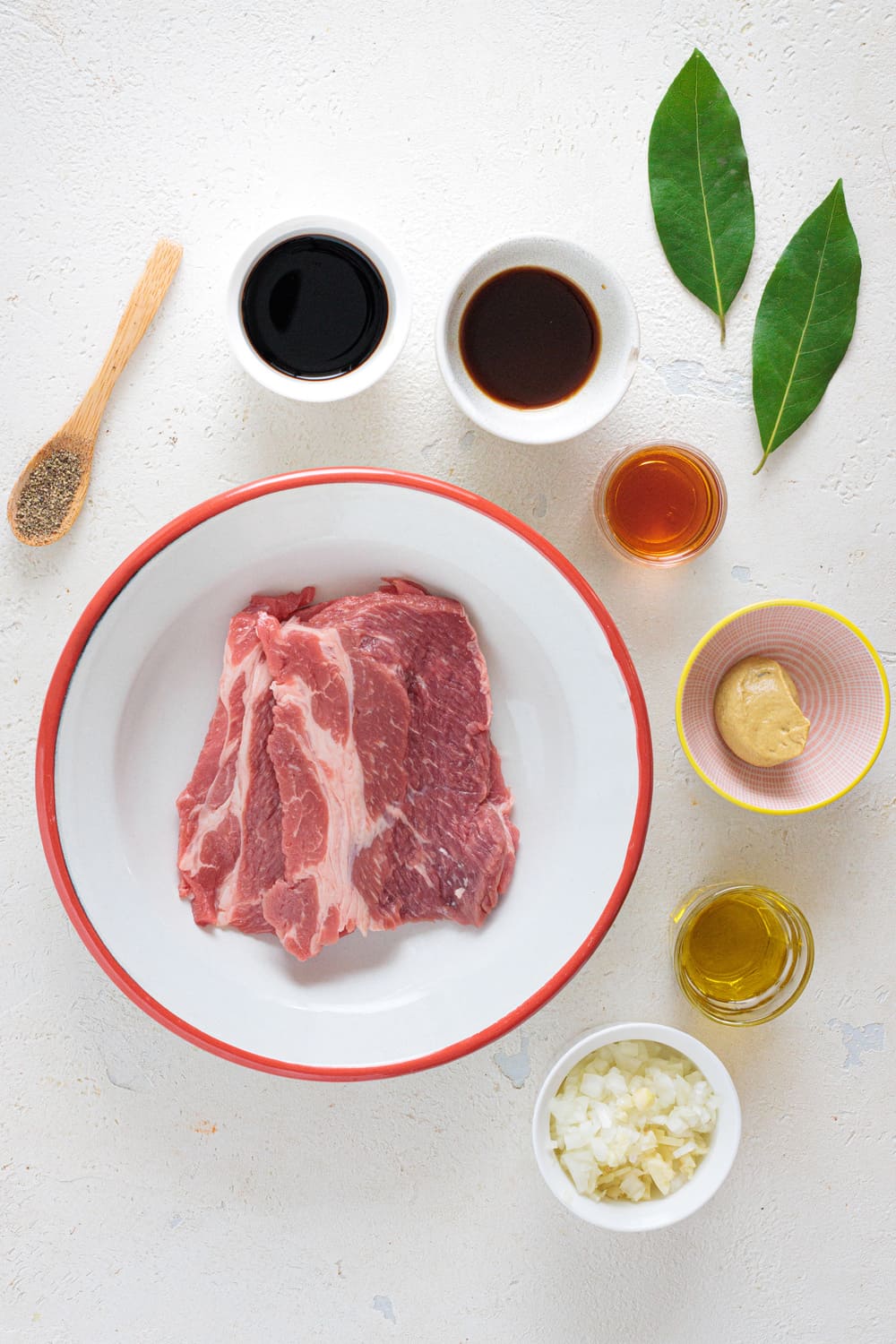
- 3 steaks (about 6–8 oz each, preferably sirloin or flat iron)
- 1 teaspoon Dijon mustard
- 1 garlic clove, finely chopped
- ½ onion, finely chopped
- 1 tablespoon soy sauce
- 1 tablespoon extra virgin olive oil
- 1 tablespoon Worcestershire sauce
- 1 tablespoon red wine vinegar (or apple cider vinegar)
- 2 bay leaves
- Freshly ground black pepper, to taste
This is enough marinade for 3 steaks. You want them well coated rather than swimming in liquid, so a resealable bag works particularly well because you can keep the marinade in close contact with the meat.
How To Make It
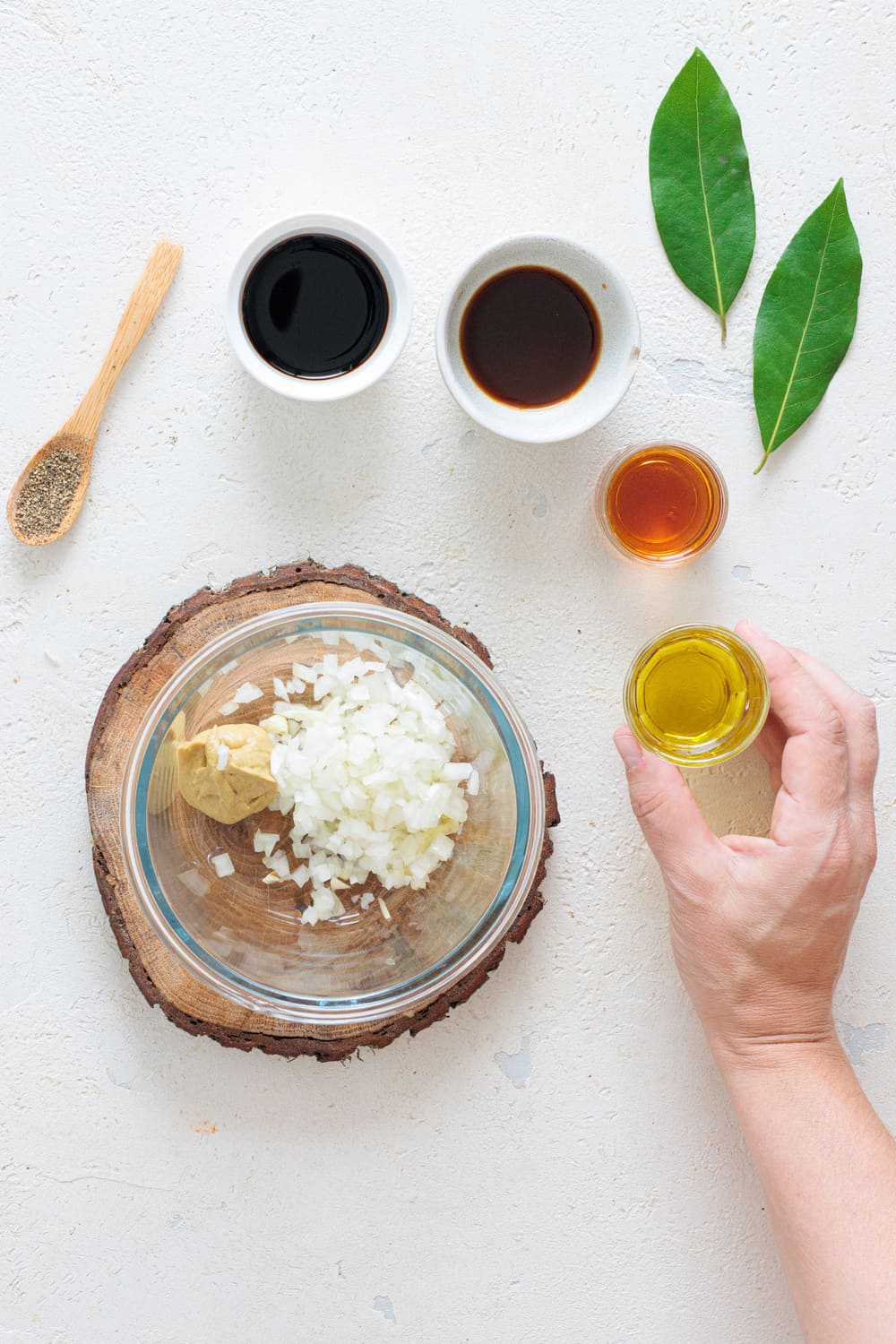
There isn’t much technique involved in making the marinade itself. I mix the mustard with the finely chopped garlic and onion first, then add the soy sauce, olive oil, Worcestershire, vinegar, bay leaves and plenty of black pepper.
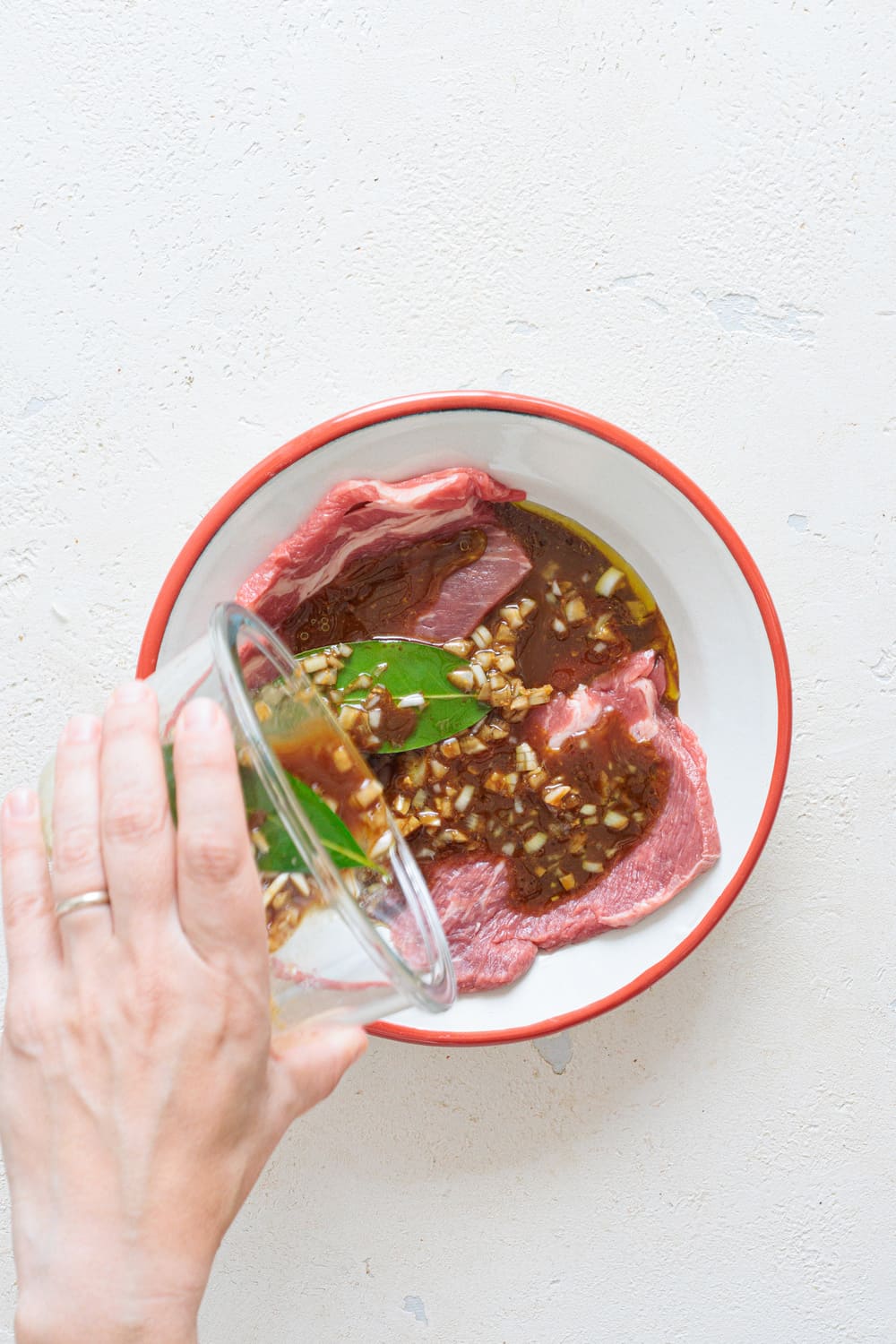
Once everything is mixed together, I add the steaks and make sure they’re well coated on all sides. Then I transfer the whole lot to a resealable bag or covered container and leave it in the fridge for 3–4 hours.
I wouldn’t be tempted to turn that into an overnight situation. More marinating isn’t always better, particularly when vinegar is involved. Too much time in an acidic marinade can start affecting the surface texture of the meat.
About 30 minutes before I want to cook, I take the steaks out of the fridge.
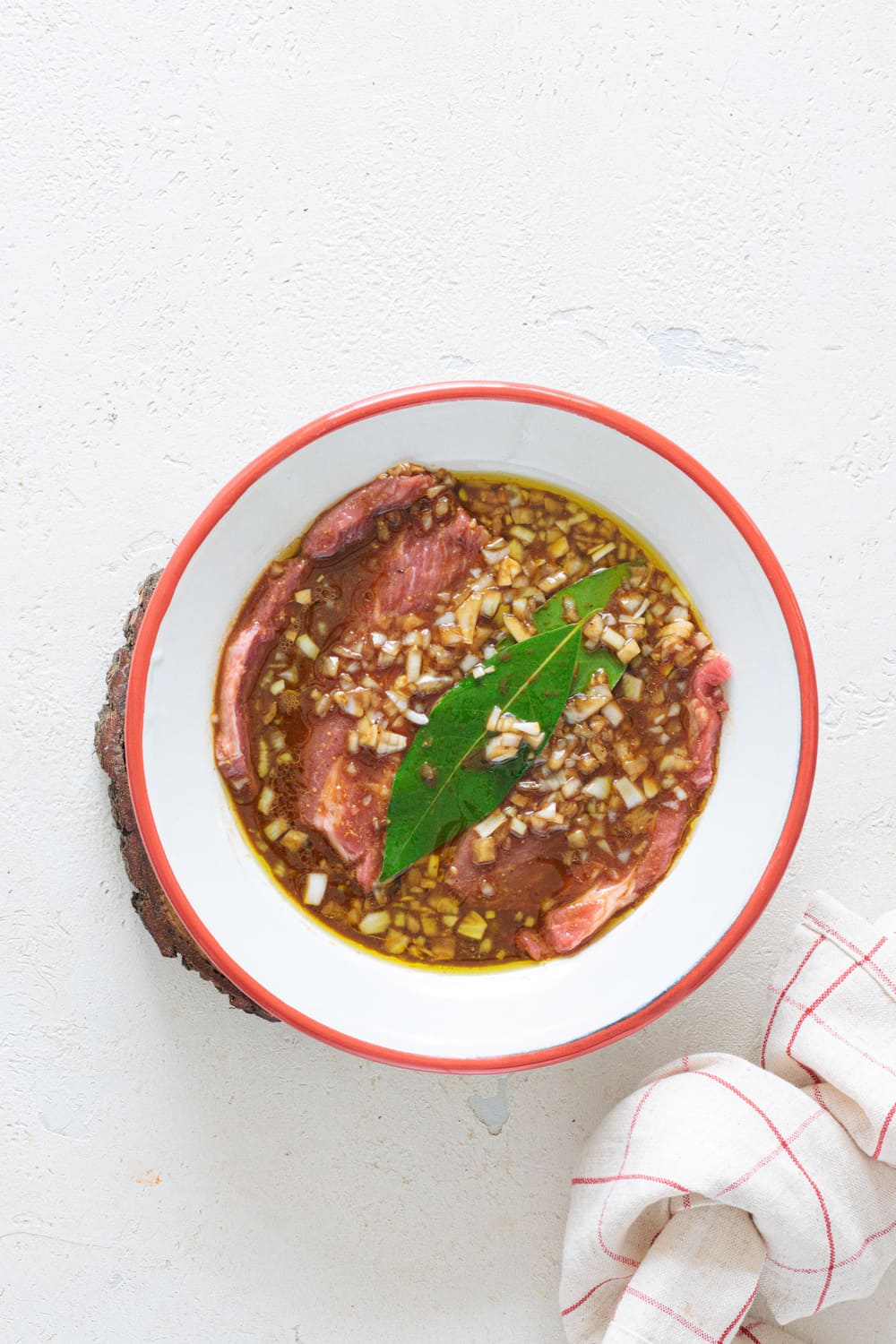
Then, importantly, I pat them dry. We spent several hours putting marinade onto them only to wipe it off, which admittedly sounds counterproductive, but we’re keeping the flavor while getting rid of excess surface moisture. Discard any leftover marinade that has been in contact with the raw steaks.
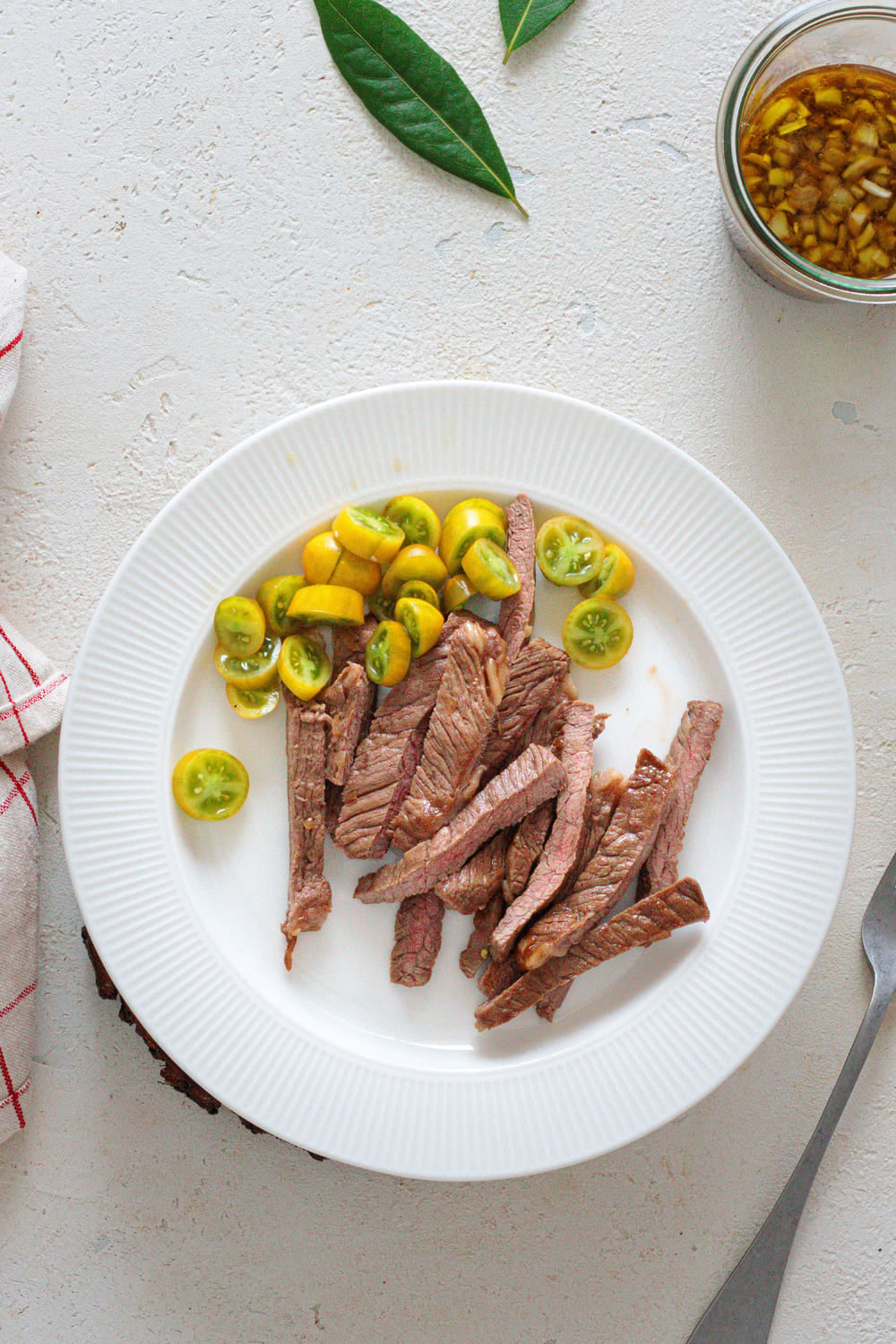
For thinner steaks, about 2 minutes per side can be a useful starting point, but thicker cuts will need longer. Always check the internal temperature with a meat thermometer rather than relying on cooking time alone.
And then: rest. Five minutes. Don’t negotiate with the steak.
What Steaks Work Best?
Sirloin, flank, skirt, flat iron, and similar cuts are all good candidates. Just remember that thickness and cut will affect cooking time considerably, so the suggested two minutes per side should be treated as a starting point, not a universal steak law.
For tougher cuts, how you slice the cooked steak matters too. Slice against the grain and the meat will be noticeably easier to chew.
And don’t forget to pat your steaks dry before you take them to the pan. Why? Because moisture is the enemy of a good sear.
The marinade has already done its job by the time the steak comes out of the fridge. Leaving lots of liquid clinging to the surface means that liquid has to evaporate before the meat can properly brown.
Patting the steak dry gives it much better contact with the hot pan and helps you get a browned exterior without having to overcook the center.

Don’t Forget the Rest
The five minutes after cooking are part of the recipe.
Move the steaks to a warm plate, loosely cover them with foil and leave them alone. Cutting immediately means more of those juices end up on the plate rather than staying in the steak.
Use those five minutes to finish whatever you’re serving alongside it (like my Rustic Make-Ahead Mashed Potatoes). Or stare impatiently at the steak. Both are acceptable activities as long as you don’t cut it.
And if one steak happens to survive dinner, even better. Let it sit in the fridge overnight because tomorrow it gets to become the star ingredient in my Leftover Marinated Steak Sandwiches. Just make sure to refrigerate any leftover steak within two hours of cooking.

Steak Marinade for Tender Steak
Description
An easy steak marinade made with mustard, soy sauce, Worcestershire, garlic and vinegar to add plenty of flavor to affordable cuts of steak. Marinate for a few hours, sear in a hot pan and let the steak rest for a tender, flavorful dinner.
Ingredients
Instructions
-
Make the marinade
In a large bowl, combine the mustard, garlic and onion. Add the soy sauce, olive oil, Worcestershire sauce, vinegar, bay leaves and freshly ground black pepper. Mix well.
-
Marinate the steaks
Place the steaks in a resealable bag or container with a lid and pour the marinade over them, making sure the meat is evenly coated. Remove as much air as possible if using a bag, seal and refrigerate for 3–4 hours.
-
Get the steaks ready to cook
Remove the steaks from the refrigerator about 30 minutes before cooking. Take them out of the marinade, discard the remaining marinade and pat the steaks thoroughly dry with paper towels.
-
Sear the steaks
Heat a grill pan or skillet over medium-high to high heat. Cook the steaks for about 2-5 minutes per side, depending on their thickness, until they reach an internal temperature of at least 145°F (63°C). Cook in batches if necessary to avoid overcrowding the pan.
-
Let them rest
Transfer the steaks to a warm plate, loosely cover with foil and rest for 5 minutes before slicing and serving.
Nutrition Facts
Servings 3
- Amount Per Serving
- Calories 340kcal
- % Daily Value *
- Total Fat 19g30%
- Saturated Fat 6g30%
- Cholesterol 5mg2%
- Sodium 480mg20%
- Potassium 550mg16%
- Total Carbohydrate 4g2%
- Dietary Fiber 0.3g2%
- Sugars 1.5g
- Protein 37g74%
- Calcium 25 mg
- Iron 3.2 mg
* Percent Daily Values are based on a 2,000 calorie diet. Your daily value may be higher or lower depending on your calorie needs.